Now Reading: How Advanced Technologies Are Transforming Parking Facility Management
-
01
How Advanced Technologies Are Transforming Parking Facility Management

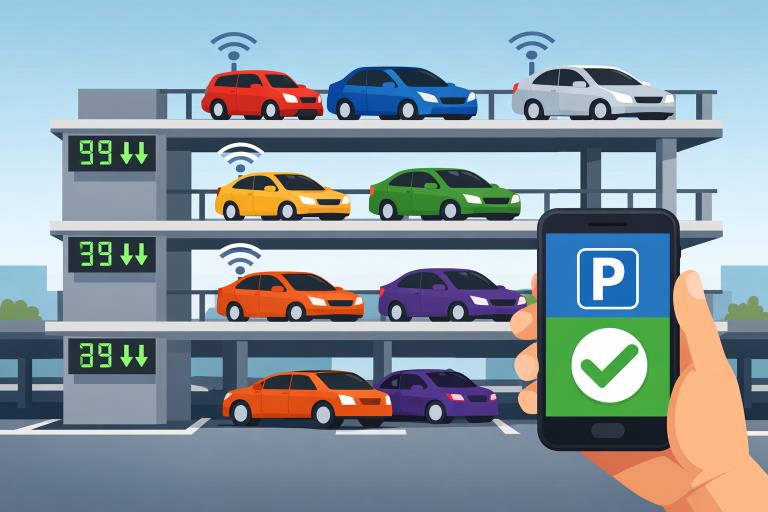
Managing parking facilities has become increasingly intricate as urban populations grow and vehicles fill city centers. The deployment of advanced technologies addresses these challenges by improving operational efficiency and the overall experience for facility users. Modern solutions such as parking software for real-time occupancy and payment tracking provide facility managers with the tools they need to keep pace with rising demand and expectations.
Today’s drivers expect seamless entry, easy payment, and real-time parking info. This demand for convenience has spurred growth in smart systems that leverage data analytics, AI, and wireless technology. These tools reduce operational issues, improve safety, and boost customer satisfaction in parking facilities.
Success depends on a facility’s ability to adapt to these changing needs. Digital solutions can automate tasks, improve reporting, streamline payments, and optimize space use. They also support sustainability by reducing vehicle circulation and emissions from drivers searching for parking spots.
For forward-looking property owners and parking operators, technology-driven management begins a new era in urban mobility. Adopting these systems now can future-proof operations amid evolving city transportation. A report from the International Parking & Mobility Institute states that these smart solutions benefit users and provide tangible gains for operators and municipalities.
Smart Parking Guidance Systems
Smart parking guidance systems use detection and signage to reduce time spent circling for spaces. These systems, such as LED panels and sensors, direct drivers to available parking spots, reducing congestion and improving safety. For example, Bordeaux’s Rive Droite district benefits from Quercus Technologies’ real-time LED guidance, improving parking efficiency and ease. Guidance systems also assist emergency vehicles and reduce infrastructure wear, lowering costs. As urban areas densify, these systems support smart city initiatives by integrating parking data with municipal networks, boosting urban planning, mobility, and property value.
AI-Powered Payment Solutions
AI-powered payment systems further ease the parking process by automating fee collection, reducing human error, and accommodating various payment preferences. By leveraging machine vision and license plate recognition, solutions such as PRRS’s Autostart facilitate gateless, free-flow parking, enabling automatic billing to a driver’s account without issuing a ticket. These precise and reliable payment mechanisms streamline exits and reduce queues at pay stations, all while creating auditable transaction histories for operators.
Moreover, AI-driven payment systems are continually evolving, offering increasingly intelligent services such as predictive pricing, loyalty rewards, and personalized promotions tailored to individual driving and parking patterns. These platforms can support digital wallets, contactless payments, and mobile transactions, further enhancing convenience for tech-savvy users. Operators benefit by leveraging data collected through these platforms to optimize pricing strategies and create targeted marketing campaigns, maximizing both parking occupancy and revenue.
Wireless Vehicle Counting
Wireless vehicle counting solutions provide vital operational data for parking managers. Platforms like Eleven-x’s eXactpark™ leverage wireless sensors to monitor vehicle flows and occupancy in real time, regardless of the facility’s size. By collecting granular entry, exit, and occupancy data, these systems enable facility owners to adjust pricing, improve staffing, and deploy targeted maintenance, making operations nimbler and more responsive to unpredictable demand.
The versatility and scalability of wireless vehicle counting technology allow both public and private facilities to efficiently manage their resources, whether monitoring a single lot or multiple garages across a city. These solutions can seamlessly interface with access control systems, maintenance alerts, and even predictive analytics, empowering managers to anticipate demand surges and proactively manage their assets. Detailed vehicle data supports long-term planning, helping operators justify expansions, redesign layouts, and integrate with broader transportation networks to enhance citywide mobility.
Integrated Smart Parking Platforms
Integrated platforms merge disparate data sources, such as access control, payments, and occupancy sensing, into a single dashboard, simplifying management and reporting. Solutions such as ABMVantage offer robust tools for facility operators, providing at-a-glance visibility and seamless control of complex parking environments. By embracing integration, operators minimize redundancies and deliver a unified parking experience to users, from entry to exit.
These platforms often provide advanced analytics features, including predictive modeling and automated alerts for abnormal activity, helping operators proactively address occupancy anomalies or payment discrepancies. Reporting modules can generate actionable insights that inform policy changes, facilitate regulatory compliance, and support budgeting and forecasting activities. By embracing integrated tools, operators position themselves at the forefront of smart city initiatives, linking parking management to urban mobility ecosystems for greater efficiency and connectivity.
Event Parking Management
Large events place unique strains on parking facilities, demanding precision coordination to handle fluctuating influxes of vehicles. Vision-based solutions combine car counting, license plate recognition, and digital signage to manage real-time occupancy and flow. These features empower attendants and guests alike, ensuring smooth arrivals and departures even during surges and minimizing the frustration associated with major-event parking.
Effective event parking management is crucial for large stadiums, convention centers, and entertainment districts where clear communication and real-time updates can make or break an attendee’s experience. Integration with event ticketing systems and navigation apps allows guests to reserve spots in advance, reducing uncertainty and supporting streamlined crowd control on event day. Facility operators can also analyze historical event data to better forecast parking needs, improve staffing and pricing strategies for future gatherings, and prioritize both safety and attendee satisfaction.
Real-Time Parking Occupancy Data
Reliable real-time occupancy data is indispensable for both drivers and operators. INRIX’s recent integration with Automotus added hundreds of city blocks and new cities to its real-time parking data platform, enhancing the flexibility and accuracy of municipal parking management. This kind of data empowers cities to set dynamic pricing, optimize enforcement, and share information with navigation apps used by millions of drivers worldwide.
Access to accurate occupancy data also fuels smart enforcement strategies, reducing the workload on on-site staff and enabling targeted interventions where and when they are needed most. Integration with mobile apps allows drivers to check live space availability before they depart, reducing traffic congestion and the city’s carbon footprint. Municipalities leverage aggregated occupancy data for urban planning, transportation modeling, and policy-making, advancing smarter, greener city initiatives that benefit all urban stakeholders.
Conclusion
Advanced technologies are transforming parking management, helping owners and operators meet growing urban needs efficiently. Smart guidance, AI payment solutions, wireless counting, and unified platforms turn parking into a smooth part of urban life. These tools are crucial for future-proofing properties and enhancing experiences for operators and users as cities evolve. Innovation is expected to accelerate as congestion increases and mobility trends shift. Investing in digital infrastructure now will enable sustainable growth, community engagement, and new revenue. As parking integrates more with transportation, stakeholders—from city officials to drivers—benefit from more flexible, data-driven, and resilient urban environments.