Now Reading: How To Build A Low-Maintenance Outdoor Living Space In Prince William County, Virginia
-
01
How To Build A Low-Maintenance Outdoor Living Space In Prince William County, Virginia
How To Build A Low-Maintenance Outdoor Living Space In Prince William County, Virginia

A well-planned yard should make everyday life easier, not create another long list of weekend chores. For homeowners seeking a landscaping company Prince William County for guidance, the strongest outdoor plans begin with practical habits, local site conditions, and realistic maintenance expectations.
Whether the goal is a quiet patio in Woodbridge, a family gathering area in Manassas, or a more usable backyard elsewhere in Prince William County, Virginia, the best designs balance comfort with durability. A smaller, well-organized space is often more inviting and easier to maintain than a large yard filled with features that do not fit the household’s routine.
Define Your Outdoor Goals
Start with how the space should function. Regular outdoor diners may prioritize a level surface near the kitchen; those seeking a peaceful retreat may prefer comfortable seating, shade, and privacy. List key activities, such as dining, grilling, gardening, pet use, play, or entertaining. Separate essentials from future features: a compact patio, a direct walkway, and a shaded table may offer more daily value than a large lawn or an elaborate accessory area.
Study Your Yard Before Planning
Observe the yard before choosing materials or plants. Note where sunlight falls in the morning and afternoon, where wind is strongest, and which areas remain wet after rain. Existing trees, roots, utility lines, slopes, drainage routes, and desirable views can all influence the layout.
Questions To Ask
- Which areas are comfortable at different times of day?
- Where does water collect or flow during a storm?
- Which routes do people naturally use between the house, driveway, and yard?
- What should be screened, framed, preserved, or opened up?
Choose Durable Materials
Choose paving, edging, furniture, and finishes based on moisture levels, foot traffic, and maintenance needs. Busy households benefit from stable, easy-clean surfaces. Consider long-term costs: cheap materials needing frequent sealing, repainting, or replacement may require more effort. Keep transitions between lawn, paving, steps, and seating visible and easy to navigate.
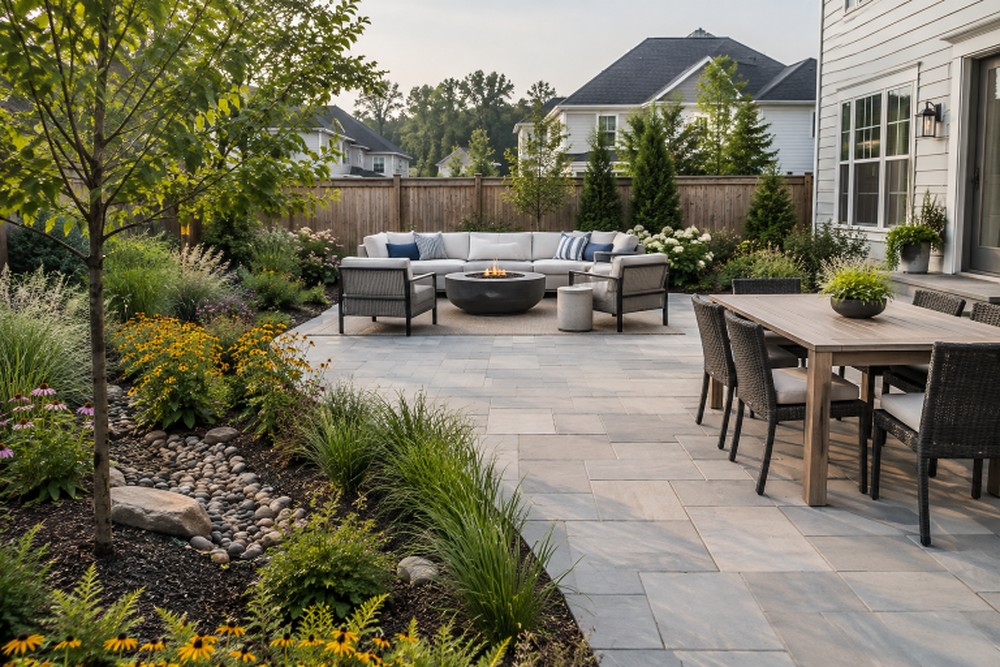
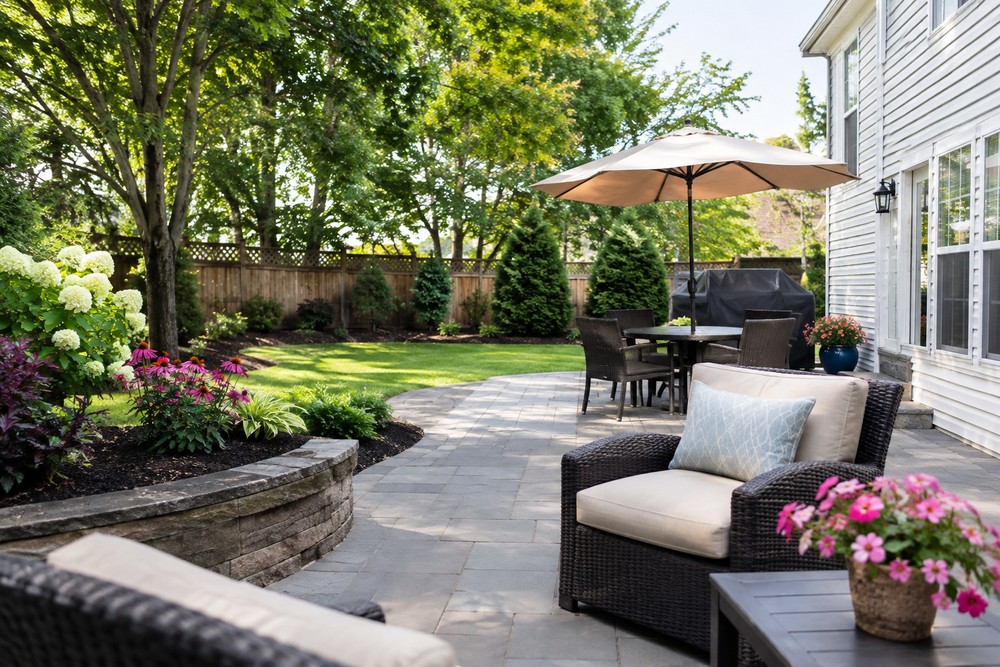
Wide photorealistic daylight view of a planned Prince William County, Virginia, suburban backyard, showing a durable patio, connected walkway, shaded seating, planting beds, open lawn, mature trees, and the home.
Plan Functional Outdoor Zones
Dividing a yard into clear zones can make the entire property feel more useful. Each space should have a purpose, adequate room for movement, and a logical connection to the next area. Avoid forcing too many functions into one cramped patio.
- Dining zone: A level spot near an entrance or kitchen.
- Lounge zone: Seating for conversation, reading, or relaxing.
- Cooking zone: Space for a grill, preparation surface, and safe circulation.
- Activity zone: Open room for pets, games, or children.
- Garden zone: A focused area for herbs, flowers, shrubs, or habitat planting.
Use Smart Planting Principles
Low maintenance does not mean removing every plant. It means selecting plants that suit the available light, soil, and moisture conditions. Grouping plants with similar water needs can simplify irrigation, while allowing enough room for mature growth reduces crowding and the need for repeated pruning.
Use a layered mix of trees, shrubs, perennials, and ground covers where appropriate. Mulch can help retain soil moisture and limit weed growth, and climate-appropriate plant materials and grouped watering needs can reduce unnecessary supplemental watering over time.
Manage Water And Drainage
Address drainage before installing finished surfaces or planting beds. Water flowing toward foundations, pooling on patios, or washing over slopes can damage landscapes and require ongoing maintenance. Direct downspouts away from the home and prevent low spots near structures.
Outdoor water use matters, too. The EPA estimates that U.S. homes use nearly 8 billion gallons of water outdoors daily, mostly for irrigation. Water plants as needed and prevent runoff to support healthy landscapes and conserve water.
Add Shade, Lighting, And Privacy
Comfort features extend the hours when an outdoor space can be enjoyed. Place seating to avoid the harshest afternoon exposure when possible, then add shade with a tree canopy, umbrella, pergola, or other suitable structure. One well-designed shaded seating area can be more useful than trying to cover the entire yard.
Use low-glare lighting for paths, steps, entrances, and gathering areas. Privacy can come from fencing, screens, shrubs, or trees, but avoid blocking needed visibility around doors, walkways, and windows.
Control Costs With Phased Planning
A phased approach can make a major project more manageable without losing the overall vision. Begin with grading, drainage, access, and any utility needs. Next, build the primary patio, paths, or seating area. Planting, lighting, shade, privacy features, and optional upgrades can follow as budget allows.
Plan future additions before installing finished surfaces. Preparing for electrical service, irrigation, or drainage improvements early can help avoid the need to remove new paving later.
Create A Simple Maintenance Plan
Every outdoor area needs some care, but a clear routine prevents small problems from becoming expensive repairs. Check irrigation and high-use surfaces weekly during the active season. Monthly tasks may include trimming fast-growing plants, clearing debris, and checking outdoor lighting.
Seasonally, inspect drainage routes, refresh mulch as needed, clean hard surfaces, and adjust watering practices. Keep a short log of recurring issues, such as puddling, plant stress, or loose edging, so future improvements are based on observation rather than guesswork.
Final Planning Checklist
- Does the layout support the way the household actually spends time outdoors?
- Are walking routes direct, safe, and adequately lit?
- Can rainwater move away from the house and finished surfaces?
- Do plants fit the property’s light, soil, and moisture conditions?
- Are materials appropriate for expected use and upkeep?
- Can the space be maintained within the available time and budget?
- Have future additions been considered before construction begins?
Build For Everyday Use
A successful Prince William County outdoor living space is useful first, attractive second, and manageable for years to come. By planning around daily routines, durable materials, thoughtful drainage, sensible planting, and a realistic maintenance schedule, homeowners can create an inviting yard without turning it into a daily chore.