Now Reading: When a Slow Drain Signals More: A Practical Guide to Hidden Pipe Problems in Harrisburg, Pennsylvania
-
01
When a Slow Drain Signals More: A Practical Guide to Hidden Pipe Problems in Harrisburg, Pennsylvania
When a Slow Drain Signals More: A Practical Guide to Hidden Pipe Problems in Harrisburg, Pennsylvania

A slow sink, tub, or floor drain can be easy to dismiss, especially when it seems limited to one fixture. In Harrisburg, Pennsylvania, however, recurring drainage changes can sometimes point to a blockage or defect farther along the line. A timely drain inspection can help identify what is happening inside a pipe before decisions are made about cleaning, repairs, or excavation.
Older neighborhoods, changing ground conditions, mature landscaping, and periods of heavy rainfall can all affect private drainage systems over time. While a slow drain may result from ordinary hair, soap residue, or food waste near the fixture, it can also be an early sign of buildup, roots, pipe damage, or poor flow in a buried line.
Why Small Drain Problems Deserve Attention
A single slow bathroom sink is not automatic proof of a major pipe failure. Still, small changes are useful information. For example, a sink may begin draining slowly, then a nearby shower starts gurgling, or a toilet seems to flush differently. When symptoms spread to more than one fixture, the source may be beyond the trap or short branch pipe. Investigating early can reduce guesswork and document the condition before a complete backup occurs.
Warning Signs That Point Beyond A Simple Clog
Drain issues deserve closer attention when they recur or affect multiple fixtures. Signs of a deeper drainage problem can include:
- Clogs that reappear soon after plunging or cleaning.
- Slow drains in separate rooms of the home.
- Gurgling from a toilet, sink, tub, or floor drain.
- Sewer-like odors near fixtures or drains.
- Water rising in a tub or shower when a toilet is flushed.
- Drainage changes that become noticeable after heavy rain.
Common Causes Of Hidden Pipe Trouble
Problems inside a drain line can range from removable material to structural damage. Grease, sediment, soap residue, and debris may narrow the pipe. Tree roots can enter through small openings at joints or cracks. Aging materials, soil movement, and pressure from surrounding ground may contribute to cracks, misaligned sections, or low spots where water and solids collect. Properties served by onsite systems may also need guidance from a qualified septic company when drainage symptoms could involve the tank, drainfield, or connecting lines.
Symptoms alone cannot confirm which condition is present. A drain that appears clogged may have a buildup, a broken section, or an entirely separate plumbing issue. Looking inside the line provides stronger evidence than repeating the same cleaning attempt without knowing why the obstruction returned.
How A Camera Inspection Works
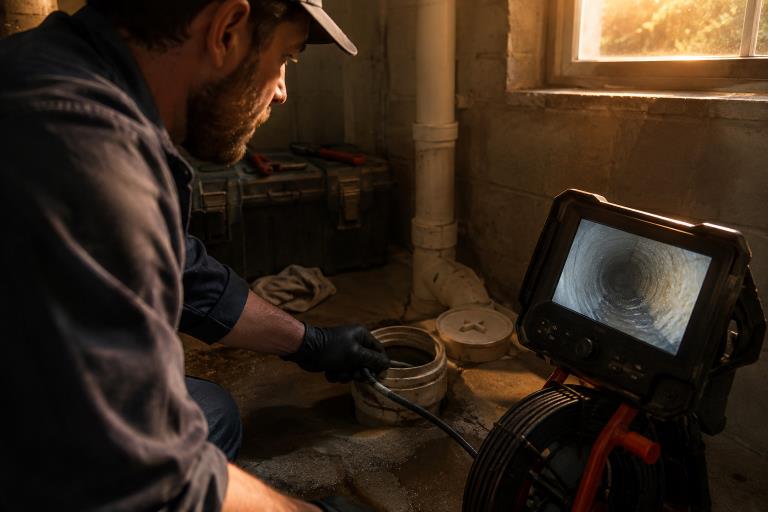
A camera inspection generally begins at an accessible point, such as a cleanout or suitable drain opening. A small waterproof camera is guided through the pipe while the operator watches a live video feed. The video can show where flow is restricted and may help identify roots, cracks, separated joints, standing water, or lodged objects.
- Locate an appropriate entry point into the drainage system.
- Guide the camera through the line.
- Observe pipe conditions and obstructions on the video feed.
- Note the approximate location of significant findings.
- Review the evidence before selecting cleaning or repair work.
This process is generally less disruptive than opening a floor, driveway, wall, or yard before the problem’s location and nature are known.
What An Inspection Can Reveal
Camera footage can help distinguish between a temporary blockage and a pipe condition that may continue causing trouble. Common findings include:
- Soft buildup: Grease, scale, or debris that may respond to appropriate cleaning.
- Root intrusion: Roots entering through joints, cracks, or other weak points.
- Cracks or openings: Damage that can admit soil or contribute to recurring blockages.
- Bellies: Low sections where water and solids can remain instead of flowing away.
- Collapse or severe offset: A restriction that can greatly reduce or stop flow.
- A clear line: Evidence that the source may be closer to a fixture or elsewhere in the plumbing system.
Saved video, timestamps, and location notes make the findings easier to discuss. Consistent condition reporting inside private sewer and drain lines is also a focus of industry inspection training.
When Cleaning May Be Enough
Cleaning may be a reasonable next step when the camera shows ordinary buildup, the pipe remains intact, and water can move through the line properly once material is removed. Cleaning removes obstructions, but it does not repair a crack, rebuild a collapsed section, or correct an improper slope. If the same symptoms return quickly, the line may need further evaluation.
When Repair Or Replacement May Be Needed
Repair decisions depend on the type, length, depth, and location of damage, as well as the pipe material and its history. A localized defect may be addressed with a targeted repair. Some circumstances may allow pipe lining or other trenchless approaches, while widespread deterioration or a major collapse may require replacement. Local requirements, access limitations, landscaping, and future property plans can also influence the practical option.
How To Prepare For A Drain Inspection
Clear notes and access can make an inspection more useful. Before an appointment, consider taking these steps:
- Write down when the symptoms began and how often they occur.
- List every fixture that drains slowly, gurgles, or backs up.
- Note previous cleaning attempts and whether they helped.
- Clear access to cleanouts, utility rooms, and basement drains.
- Gather plumbing records, renovation details, or property plans if available.
- Ask whether household water use should be limited beforehand.
Questions To Ask After The Inspection
- Where is the issue located?
- Is it a blockage, a structural defect, or both?
- How urgent is the condition?
- Could cleaning provide lasting improvement?
- What repair approaches are appropriate for this location?
- Can the findings be provided in video or written form?
- Are permits or local approvals likely to be needed?
Simple Habits That Help Prevent Future Problems
Household habits cannot prevent every pipe issue, but they can reduce avoidable buildup. Keep fats, oils, grease, wipes, paper towels, and other non-flushable materials out of drains. Use screens in showers and sinks, pay attention to recurring symptoms, and retain inspection and repair records for future reference.
For homes with septic systems, routine care matters as well. The EPA recommends regular septic inspections and pumping based on household conditions, along with careful disposal practices and protection of the drainfield.
Final Takeaway
A slow drain in Harrisburg is more than an inconvenience when it becomes persistent, spreads to other fixtures, or is paired with odors, gurgling, or backups. A careful inspection can show whether the line needs cleaning, monitoring, repair, or no major work at all. The right next step should be based on what is actually inside the pipe, not only on what is visible at the fixture.