Now Reading: Building Resilient Networks: Strategies for a Cloud-First World
-
01
Building Resilient Networks: Strategies for a Cloud-First World

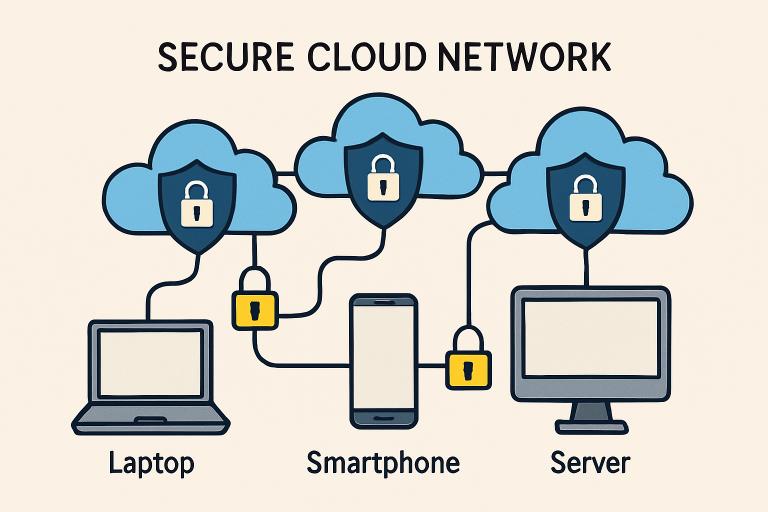
As digital transformation accelerates, organizations are increasingly adopting cloud-first strategies to harness the agility and scalability of remote and distributed computing environments. But with this shift comes a complex new threat landscape and heightened pressure on IT leaders to maintain secure, resilient network infrastructures. Successful adaptation means rethinking how network and security solutions, such as SD-WAN providers, are implemented across modern architectures, ensuring both security and performance remain uncompromised in the cloud era.
Businesses must now focus on creating multi-layered defense models, embedding security practices directly into the network fabric, and staying ahead of evolving cyber threats. Ensuring business continuity and data protection requires a strategic approach that combines new tools and frameworks with a clear understanding of the regulatory and technological changes shaping today’s digital world.
End-users, partners, and regulators all expect that cloud workloads remain secure, accessible, and compliant. Consequently, organizations need a roadmap to reinforce their networks against both current and future risks. From leveraging AI-driven analytics to deploying zero-trust frameworks, building resilient networks is essential for long-term growth and innovation.
This article outlines key strategies for building highly resilient, secure networks in a cloud-first landscape, offering actionable insights for decision-makers and network architects alike.
Understanding Cloud-First Networking
The cloud-first approach means prioritizing cloud-based resources over on-premises infrastructure. Enterprises enjoy dynamic scalability, reduced operational expenditure, and newfound business agility. However, moving critical applications and data to the cloud also creates fresh vulnerabilities, especially around data privacy, visibility, and network segmentation.
Many organizations have found that traditional perimeter-based security models are no longer effective. As workloads shift across public, private, and hybrid clouds, new models such as cloud-native firewalls, identity management solutions, and virtual network appliances are needed to maintain robust, adaptable security postures. Building a cloud-first network always starts with establishing secure, reliable, and high-performance connections between users, endpoints, and data centers, regardless of location.
Implementing Zero Trust Architecture
Zero Trust Architecture (ZTA) rejects the idea that anything inside the network perimeter should be trusted by default. Instead, the Zero Trust model mandates that every device, user, and application must continuously verify legitimacy and permissions at every access point. Its core tenets include:
- Continuous user and device authentication
- Network micro-segmentation for minimizing lateral movement
- Ongoing real-time monitoring for suspicious activity
Integrating these principles provides tangible security benefits, especially when open-source tools are used alongside cloud-native features. According to a recent study, micro-segmentation integrated into cloud networks forms a resilient Zero Trust foundation that reduces attack surfaces and more quickly isolates breaches.
Leveraging AI for Threat Detection
The speed and sophistication of today’s cyber threats make traditional human-centric monitoring models unsustainable. Artificial Intelligence (AI) and Machine Learning (ML) represent the next frontier in threat detection, as they process enormous volumes of network telemetry and logs to spot malicious behavior faster and more accurately than manual methods.
- AI enables real-time detection of unknown threats
- Machine learning automates and accelerates incident response workflows
- Adaptive models evolve in lockstep with complex attack vectors
Industry leaders like Cisco are embedding AI capabilities into their security platforms to analyze network data, respond automatically to advanced malware, and even predict potential attack campaigns. Their advance. ments signal a move toward autonomous security layers deeply integrated into network environments.
Adopting SASE Solutions
Secure Access Service Edge (SASE) solutions combine wide-area networking (WAN) with comprehensive security functions in a unified, cloud-native suite. This convergence is a response to the growth in remote workforces, distributed offices, and SaaS adoption, all of which have made traditional hub-and-spoke network models obsolete.
- SASE platforms enforce security uniformly, regardless of user location or device
- They provide optimized data routing and performance even as traffic flows bypass traditional corporate data centers
- Built-in scalability helps organizations adjust easily to changing business needs
Research from Frost & Sullivan confirms that the rise of AI, the move to Zero Trust, and a demand for converged security are propelling SASE adoption among enterprises seeking efficiency and simplified management.
Ensuring Data Sovereignty
Data sovereignty is the legal concept that information is subject to the regulations of the country in which it is collected or stored. Many global organizations face challenges balancing business expansion with data localization and compliance requirements across jurisdictions.
- Thoroughly understand and map regulatory obligations in every operational market
- Develop data localization and protection strategies to avoid penalties and mitigate risks
- Evaluate cloud providers on their ability to deliver sovereign cloud offerings
For example, NATO partnered with Google Cloud to adopt purpose-built, sovereign cloud capabilities that enable digital modernization while meeting stringent data-residency rules. This approach is now a model for other organizations navigating complex regulatory environments.
Embracing Post-Quantum Cryptography
Future-proofing enterprise networks means preparing for quantum computing advancements that could render existing encryption methods vulnerable. Post-quantum cryptography (PQC) provides new algorithms designed to withstand attacks from quantum computers.
- Stay abreast of developments in PQC standards and NIST recommendations
- Conduct a comprehensive audit of cryptographic technologies currently in place
- Begin planning for the transition to PQC, prioritizing mission-critical applications and sensitive datasets
Some organizations, like QuSecure, are already supporting enterprises with the tools and consulting needed to make the quantum-safe transition. Exploring resources from larger outlets such as Wired can also help network teams stay up to date on the latest developments in post-quantum cybersecurity.
Conclusion
Resilient networks are the backbone of digital transformation in today’s cloud-first world. By embracing Zero Trust frameworks, leveraging AI for threat detection, adopting holistic SASE solutions, ensuring data sovereignty, and preparing for the quantum future, businesses fortify themselves against current and emerging threats. Proactive planning and investment in these areas not only secures enterprises against evolving cyber risks but also lays a strong foundation for future innovation and growth.