Now Reading: How to Build a Smart Epoxy Flooring Budget in Chicago, Illinois
-
01
How to Build a Smart Epoxy Flooring Budget in Chicago, Illinois

Key Takeaways
- Chicago epoxy flooring budgets should include concrete preparation, repairs, materials, labor, and protection, not coating alone.
- Winter road salt, wet vehicles, basement humidity, and heavy garage use can affect the system a property needs.
- A lower estimate may exclude grinding, crack repair, moisture work, or a protective topcoat.
- Comparing complete written scopes helps homeowners make a more useful decision than comparing one price per square foot.
From a detached garage in Jefferson Park to a basement workshop on the South Side, a new floor coating can make a concrete space easier to clean and more finished-looking. Chicago’s unique climate and urban environment create specific demands on concrete flooring. A realistic budget begins by understanding that the epoxy flooring cost per square foot in Chicago is only one part of the total project.
Chicago properties experience seasonal challenges that affect concrete durability year-round. Snowmelt, deicing salt carried in by vehicles during winter months, spring moisture from thawing ice, and everyday foot traffic all make preparation and coating selection important for Illinois homes and garages. The best plan accounts for the specific room, its condition, Chicago’s freeze-thaw cycles, and how it will be used after installation.
1. Start With a Practical Budget Range
There is no single epoxy flooring price that fits every Chicago project. A small, clean garage slab in the North Shore and a larger floor on the South Side with old paint, cracks, or moisture concerns require very different amounts of work. Broad online ranges are useful for early planning, and this general comparison of epoxy flooring expenses can help show why materials, preparation, and installation vary. Treat any average as a starting point rather than a final quote.
2. Break the Project Into Cost Categories
A clear budget separates the work into individual categories. This makes it easier to see what is included and to compare two proposals fairly.
- Coating materials, primer, and protective topcoat
- Concrete cleaning, mechanical preparation, and dust control
- Crack filling, patching, or other slab repairs
- Decorative flakes, color additives, texture, or borders
- Labor, equipment, cleanup, and disposal
- Moisture testing or mitigation when needed
- Moving vehicles, shelving, stored belongings, or equipment
3. Account for Surface Preparation
Preparation is where a coating project is often won or lost. Epoxy needs a clean, dry, suitably profiled concrete surface to bond properly. In Chicago garages and basements, that can mean removing oil residue, salt buildup from winter deicing materials, old sealers, peeling paint, or residue left by prior coatings. The Chicago area’s humidity and moisture conditions make this step especially critical.
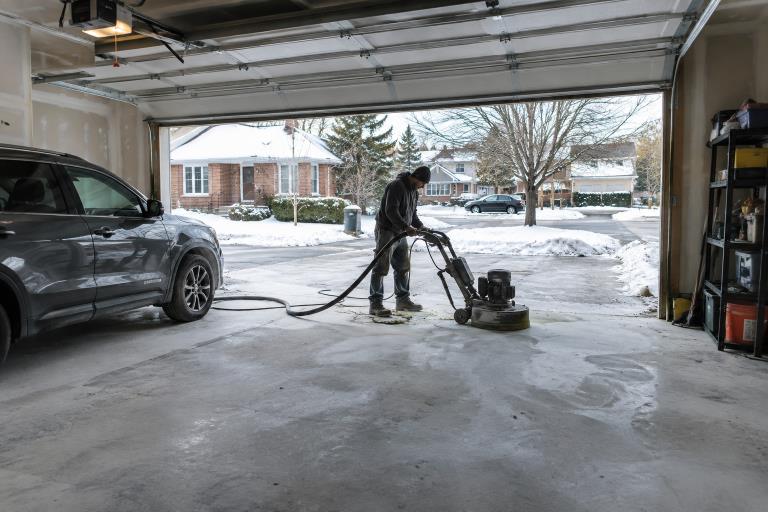
Contractors may use grinding, shot blasting, detailed cleaning, and crack repair before applying the system. A slab can look sound from across the room but still have weak spots, contamination, or surface damage that needs attention. Skipping these steps can lead to poor adhesion, visible defects, bubbling, or peeling in Illinois’s variable climate.
4. Compare Coating Options
The right system depends on appearance, traffic, cleaning habits, sunlight exposure, and whether the room is a Chicago garage, basement, laundry area, retail space, or workshop.
- Solid-color systems: A practical option for utility rooms and straightforward garages.
- Flake systems: A decorative finish that can help visually break up minor surface imperfections.
- Quartz systems: A textured option often considered for spaces needing added wear resistance.
- Metallic finishes: A more design-focused choice that requires careful installation.
- Protective topcoats: An added layer that may improve resistance to stains, wear, chemicals, ultraviolet light, and Chicago’s freeze-thaw damage.
5. Measure the Space Correctly
Measure every area instead of estimating from the number of cars a garage holds. Use the simple formula length × width = floor area, then add each separate section together. Record alcoves, storage rooms, walkways, steps, and edges that may need coating. Square footage helps establish an early budget, but the slab condition and selected system determine the final scope.
6. Compare DIY and Professional Installation
DIY Budget Items
A do-it-yourself project can reduce labor expenses, but it still requires coating materials, cleaners, degreasers, crack repair products, rollers, mixing supplies, protective equipment, and possibly equipment rental. Homeowners in Chicago should also plan for cleanup, ventilation, cure time (accounting for humidity levels), and a place to keep vehicles and belongings while the floor is unavailable.
Professional Installation Budget Items
Professional pricing generally covers labor, preparation equipment, material application, repairs included in the scope, cleanup, and scheduling. When comparing material-only costs with complete installation pricing, consider the factors that shape professional epoxy installation costs, including the surface condition and finish selected for Illinois properties.
7. Look for Hidden Project Costs
Basic estimates may not include every condition discovered during the job. Ask about old-coating removal, deep crack repair, leveling, moisture control (especially important in Chicago’s humid climate), detailed edge work, tight-access areas, slip-resistant additives, return visits, and custom decorative features. A low starting price is not automatically a better value if essential work appears later as an add-on.
8. Review Flooring Quotes With Care
- Confirm the total square footage and areas included.
- Ask how the concrete will be prepared.
- Check whether cracks and damaged areas are included.
- Identify the coating, primer, topcoat, and number of layers.
- Confirm the anticipated schedule and curing restrictions.
- Review payment terms, exclusions, and warranty language.
Request at least three written estimates with comparable scopes from Chicago contractors. The strongest quote is not necessarily the lowest one. It is the one that clearly explains what will happen to the floor before, during, and after coating.
9. Consider Long-Term Value
A Chicago garage floor faces more than ordinary foot traffic. Tires can bring in water, grit, and deicing materials during winter months, while summer projects can involve tools, bicycles, lawn equipment, and spills. A suitable system with proper preparation may reduce the need for premature touch-ups. Cleaning habits, sunlight, chemical exposure, and Chicago’s moisture conditions should all influence the decision.
10. Use a Final Budget Checklist
- The floor has been measured.
- The concrete condition has been inspected.
- Moisture concerns have been considered.
- Repairs are listed separately or included clearly.
- The coating system and the number of layers are named.
- The topcoat, labor, and equipment costs are clear.
- Exclusions are listed in writing.
- The budget includes a reserve for unexpected work.
Final Thoughts
A smart epoxy flooring budget in Chicago, Illinois, considers the whole floor system rather than only the coating price. By planning for preparation, repairs, materials, labor, protection, and long-term upkeep in this Midwestern climate, property owners can avoid surprises and choose a finish that fits the space they use every day.