Now Reading: The Sentient Home: Moving from Reactive Alarms to Predictive Protection
-
01
The Sentient Home: Moving from Reactive Alarms to Predictive Protection
The Sentient Home: Moving from Reactive Alarms to Predictive Protection

Innovations in home security are rapidly transforming how we protect our families and property. Gone are the days of simple locks and basic alarm systems; in their place is a new generation of highly sophisticated, interconnected technology. Today’s homeowners are seeking comprehensive, intelligent systems designed to fit seamlessly into daily life and adapt to an increasingly digital world. Constant advancements in smart devices, wireless communications, and artificial intelligence are fueling this shift. As security threats become more complex and varied, there is a greater demand for layered defenses and smarter solutions. Homeowners now expect their security technology to be an integral part of the smart home ecosystem—reliable, proactive, and easy to manage remotely. Trusted providers like Usprotective.net are at the forefront, offering these integrated systems that blend cutting-edge security with user-friendly controls for enhanced peace of mind. With these transformative changes, residential security is moving far beyond past limitations, creating safer, more responsive environments for modern living.
The drive toward seamless connectivity ensures that homeowners retain greater control and oversight than ever before. Features once considered futuristic or ambitious are now widely available, such as real-time security alerts, instant access to surveillance footage, and the ability to lock doors or set alarms from anywhere in the world. This remote management empowers individuals to secure their properties whether they are on-site or away, traveling or at work. It also adds a new level of convenience, reducing worry about lost keys, forgotten alarms, or missed alerts. As these trends reshape the industry, it becomes essential to understand the key technologies, market changes, and major players influencing the residential security space. By staying informed, homeowners can make strategic choices that reflect both current realities and future innovations, ensuring their homes remain protected no matter what challenges may arise.
Smart Home Integration
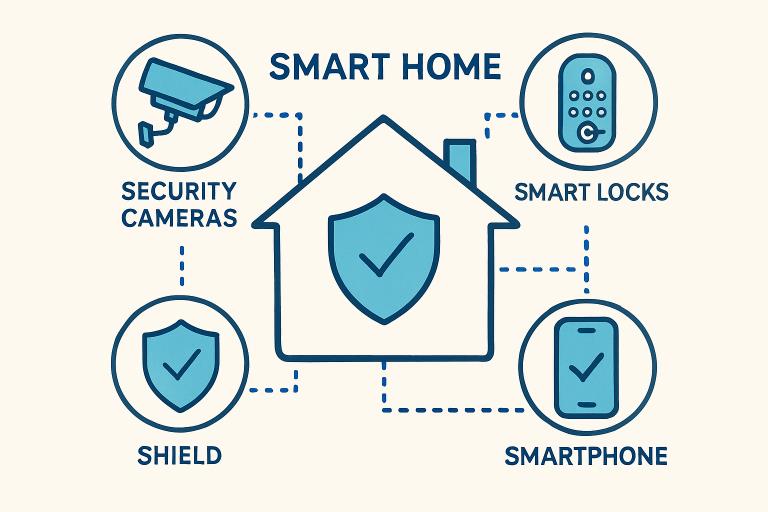
As smart technology becomes commonplace, security systems are no longer isolated devices but vital parts of the larger connected home network. Homeowners can synchronize alarms, security cameras, motion sensors, smart lighting, and door locks with centralized platforms accessible from smartphones, tablets, and even wearable devices. This seamless integration truly elevates the user experience, allowing for the automation of security routines and the customization of notifications based on personal preferences. By connecting all devices through a unified smart home app, managing one’s security system has become both incredibly intuitive and highly efficient.
For example, a smart system can be programmed so that a door automatically locks whenever the last person leaves the house or so that outdoor camera floodlights turn on the moment movement is detected after sunset. Even minor incidents, such as a window left open or an unfamiliar face at the doorstep, can trigger instant alerts on your phone. Many modern security systems now work with digital assistants such as Amazon Alexa and Google Home, allowing you to arm or disarm alarms, check camera feeds, or even communicate with visitors using only voice commands. The adoption of smart devices has already surged, fueling the next wave of collaborative home security innovation. This deep level of integration not only streamlines home management but also builds a robust and adaptive approach to home safety that can meet virtually any homeowner’s needs.
AI and Machine Learning
Artificial intelligence and machine learning are at the forefront of next-generation home security, enabling systems to provide proactive protection rather than simply recording incidents after they occur. These advanced technologies empower monitoring systems to analyze vast amounts of data, recognize normal patterns of behavior, and intelligently distinguish between everyday activities and genuine security threats. For example, AI-powered cameras can differentiate between family members, regular visitors, pets, and strangers, reducing false alarms from routine comings and goings.
Machine learning algorithms adapt over time, learning the unique rhythms of each household. This means that if a family typically receives deliveries in the afternoon, the system learns to recognize these events as non-threatening and avoids sending unnecessary alerts. By refining their decision-making processes, these systems can alert homeowners only when something truly unusual occurs, leading to a better balance between vigilance and convenience. For households with frequent deliveries, guests, or service providers, AI-driven recognition technology significantly reduces the frustration caused by excessive notifications. As security industry leaders continue to refine the power and accuracy of their algorithms, the benefit for homeowners is clear: a smarter, more intuitive, and highly proactive level of protection that can evolve alongside the household it serves.
Autonomous Security Drones
The introduction of autonomous drones represents a groundbreaking step forward in residential surveillance and monitoring. Unlike traditional cameras, which are limited by fixed angles and blind spots, these agile drones can patrol properties according to pre-set schedules or whenever sensors are triggered. When an alarm is activated—such as by a window breaking or movement in a restricted area—the drone can deploy instantly, flying directly to the scene to broadcast live video back to the homeowner or security provider. This real-time assessment gives homeowners unparalleled insight into what is happening on their property.
Not limited to just patrolling the perimeter, drones can check rooftops, backyards, and other hard-to-reach places, potentially deterring intruders who may be caught off guard by this high-tech surveillance. Some platforms now offer seamless integration with existing security networks, extending the coverage and responsiveness of traditional systems. The added mobility and flexibility provided by autonomous drones reduces vulnerabilities and significantly increases the overall deterrent effect, since would-be intruders cannot anticipate when or where they might be observed. In combination with ground-based sensors and cameras, autonomous drones are shaping the future of residential security into truly comprehensive, adaptive solutions.
Remote Guarding
Remote guarding represents another major evolution in home and property protection by merging sophisticated video analytics with live human oversight. In this model, security personnel monitor live video feeds from a secure, central location, using cutting-edge analytics software to flag suspicious activities or security breaches automatically. The system identifies potential threats, and remote guards can instantly intervene—often by issuing live audio warnings through on-site monitors, which can quickly scare off intruders before they gain entry. This approach offers the advantages of real-time response and expert decision-making without the high costs or logistical challenges of maintaining a permanent on-site presence. Remote guarding not only ensures immediate action in emergencies but also facilitates thorough reviews and rapid escalation to authorities when serious incidents occur. Demand for remote guarding services continues to grow rapidly, as businesses and homeowners alike seek scalable, cost-effective solutions that maintain high vigilance and deterrence standards. As this technology advances, it is set to become a vital complement to traditional monitoring, vastly enhancing overall security for all types of residential properties.
Market Trends
The residential security industry is currently experiencing intense innovation and rapidly evolving consumer expectations. Recent findings from industry sources, such as Parks Associates, indicate that traditional security system sales are declining, with fewer than 10% of owners purchasing new systems in the last year—a nine-year low for the sector. This does not reflect a decreased interest in maintaining secure homes but rather highlights a significant shift in consumer priorities toward more advanced, integrated solutions. Increasingly, homeowners are gravitating toward subscription-based monitoring and wireless, cellular-connected systems that offer greater flexibility and easier installation compared to older, hard-wired options. As technological advances continue to lower costs and simplify setup, more people are willing to upgrade from legacy security systems to modern, all-in-one solutions. Furthermore, demographic factors, such as the growing number of people working from home and increased urbanization, are accelerating the adoption of smart security technologies. As the industry moves away from legacy systems, homeowners can expect to see rapid growth in solutions that combine user-friendly interfaces, powerful automation, and comprehensive protection.
Conclusion
The residential security landscape is evolving at an unprecedented pace, driven by advancements in AI, seamless smart integration, autonomous surveillance technologies, and responsive monitoring services. These innovations are reshaping how homeowners approach safety, delivering solutions that are not only more robust but also easier to manage and adapt to individual lifestyles. In an era where connectivity and adaptability are prized, the next generation of home security offers the promise of greater peace of mind for families everywhere. Staying up to date with these trends and partnering with established providers ensures that homeowners are well-equipped to protect what matters most—now and well into the future.