Now Reading: Why AI-Enabled LIS Software Is the Future of Pathology
-
01
Why AI-Enabled LIS Software Is the Future of Pathology

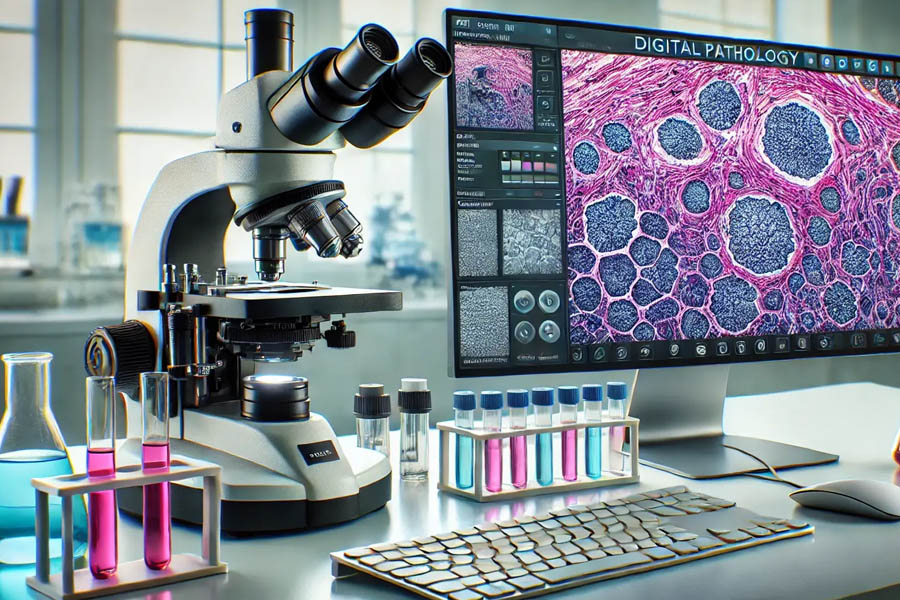
Today’s rapidly evolving medical testing environment means the laboratory is now a critical component in the decision-making process for patient care. With the digital transformation in pathology, the laboratory information system (LIS) software is the backbone of the modern lab. A good LIS software enhances efficiency, communication, patient safety, and the effective implementation of new technologies, including AI and digital imaging.
Evolution of Pathology Informatics
Historically, the pathologist relied on paper documentation or a very basic electronic storage system, which required a lot of manual input. In fact, they may have spent more time locating a slide or a patient’s information than making a diagnosis. This meant they were sifting through a lot of information, which took a lot of time. Without effective technology, the storage of information in the pathology lab was fragmented and messy. Current LIS technology builds an electronic network that interconnects all aspects of the lab, from ordering to reporting, and allows the pathologist to easily access all the information.
Optimization of the Pre-Analytical Stage
Efficiency begins before the sample reaches the microscope. One of the major advantages of LIS software is its ability to automate the pre-analytical stage, where most errors occur due to manual data entry and ineffective communication across organizational units.
LIS software enables the following in labs:
- Electronic Order Entry: Through interfacing with Electronic Health Records (EHR), an LIS eliminates paper requisitions. Orders are transmitted from the doctor to the lab. This prevents transcription errors.
- Barcoding and Tracking: Once a sample is obtained, the LIS system produces a barcode for it. This enables the system to track all tissue blocks and slides, preventing sample loss and the wrong test being performed on the wrong patient.
- Workflow Orchestration: The software automatically directs samples to the appropriate workstations for requested tests, ensuring that high-priority cases move through the process quickly.
Improving Diagnostic Accuracy and Quality Control
The consequences in pathology can be serious. An incorrectly labeled slide or an incorrect result can have serious effects on the patient. The role of LIS software is like a safety net, introducing quality controls into the workflow.
Reducing Human Error
The automated checks in the LIS identify issues instantly. For instance, if the pathologist has entered a diagnosis that does not match the previously entered tissue type, the system prompts verification. This instant feedback system ensures that quality standards are maintained.
Standardized Reporting
Modern LIS systems incorporate synoptic reporting templates. Rather than vague, uninformative free-text comments, synoptic reporting is based on structured information developed under the guidance of bodies such as the College of American Pathologists. This ensures that all required information is recorded, which is important for oncologists and surgeons to plan treatment.
Digital Pathology and AI
One major change underway in the industry is digital imaging. Instead of viewing samples on glass slides, LIS tools now enable pathologists to examine high-resolution digital slides on a computer screen. This requires an efficient LIS system capable of handling such large image files.
The LIS serves as a gateway for Artificial Intelligence software. The software can pre-screen slides, perform cell counting, and indicate cancer grades. Through the software within the LIS, labs can manage more work without compromising accuracy.
According to NovoPath, an award-winning LIS software, the adoption of AI into pathology labs allows for rapid transformation and guides the way to for modern lab operations. Labs that fail to leverage digital pathology and AI will be left behind while other labs continue to advance.
Data Analysis and Laboratory Administration
But it is not just healthcare-related tasks for which LIS computer systems are useful. The management of the lab’s budget, personnel, and equipment is handled by lab leaders. Information from the LIS helps lab managers understand what exactly is happening at the lab.
- Turnaround Time (TAT) Tracking: This system monitors the time taken for each process. This helps identify bottlenecks, which in turn assist management in allocating resources to meet the required timeline.
- Volume and Utilization Trends: Reviewing which tests are being ordered most often helps with purchasing supplies and equipment.
- Financial Operations: LIS commonly has billing functions to ensure each test is correctly billed. This prevents lost revenue.
Regulatory Compliance and Patient Confidentiality
Rules are followed strictly in pathology labs. Protection of patients’ information is a priority. The framework for securing this is offered by an LIS system.
One important feature is the use of the audit trail. Every time a record is accessed and altered, the LIS records the user and the date. This is very important in case the system is audited.
Enabling Improved Communication
The practice of medicine is a team sport, and the pathologist is an important member of the team. An LIS system interfaces the lab with the rest of the facility. Portal systems allow providers to check the status of their tests without contacting the lab.
The LIS further enhances specialist consultations. In complex situations, a pathologist can share patient images and records with specialists via digital images. Such consultations yield faster, more accurate results.
Scalability and Future
The field of medicine is constantly evolving. Every year, new biomarkers, genetic tests, and methodologies are developed. A current LIS is designed for growth, so labs can implement new tests without redesigning their technology infrastructure.
As the use of personalized medicine grows, integrating genomic information with conventional histopathology will become essential. An LIS capable of handling complex datasets will help a lab remain contemporary.
The Human Side of Technology
It may appear that the use of advanced software would minimize the role of human beings, but instead, it results in a more human-centered lab. Since it performs mundane duties, the LIS system gives the pathologists and technicians the opportunity to do what they do best, which is assisting the patient by determining their diagnosis. A good LIS system results in a reduction in burnout, errors, and the time taken for patient care. Technological advancement should help professionals, not hinder them. A complete Laboratory Information System is a major, expensive, and time-consuming process.