Now Reading: Beyond the Occasion: Finding a Luxury Watch You’ll Actually Wear
-
01
Beyond the Occasion: Finding a Luxury Watch You’ll Actually Wear

Key Takeaways
- Choose a luxury watch based on your daily routine, wardrobe, and personal style.
- Consider case size, thickness, lug-to-lug length, and overall wrist comfort.
- Compare automatic, manual, and quartz movements based on your preferred ownership experience.
- Look for durable materials such as stainless steel, titanium, sapphire crystal, or ceramic.
- Check water resistance and follow the manufacturer’s guidance for water exposure.
- Set a realistic budget that includes taxes, servicing, insurance, straps, and repairs.
- Buy from reputable sellers and verify authenticity, documentation, and service history.
- Consider long-term maintenance and service support before purchasing.
- Choose a versatile design you will enjoy wearing regularly, not just for special occasions.
- Prioritize comfort, practicality, durability, and personal preference over trends or prestige alone.
A luxury watch can mark an important moment, but the best one is also a piece you will want to wear on an ordinary Tuesday. Whether you are exploring luxury watches Toronto or comparing options elsewhere, start by thinking about comfort, routine, and the clothing you wear most often. Everyday luxury is less about choosing the most complicated or expensive watch and more about choosing a design that suits your real life. A well-considered purchase should balance fit, movement, durability, style, service needs, and a budget that remains comfortable after the initial purchase.
Start With Daily Life
Begin with where the watch will actually go. Someone who works in a formal office may appreciate a slim, understated watch that slips under a cuff. A frequent traveler, parent, or active commuter may prefer a sturdier case, a bracelet that handles moisture well, and a dial that can be read at a glance. Trends can be interesting, but daily habits should lead the decision.
Compare Watch Types
Watch categories provide a useful starting point, not a rulebook. Dress watches are generally slim and refined. Sport watches often offer stronger construction and greater water resistance. Field watches prioritize legibility and practicality. Chronographs add timing functions but can feel larger or busier. Integrated-bracelet watches create a continuous case-to-bracelet shape with a modern, structured look. The right category is the one that fits how often and where you will wear it.
Choose The Right Case Size
Measure your wrist, then look beyond the case diameter. Thickness, lug-to-lug length, bracelet weight, and case shape all affect how a watch sits. A 38 mm round watch can wear very differently from a 38 mm square model. Smaller cases often feel discreet and polished, while larger cases create more visual presence.
Quick Fit Test
- The lugs should not extend far beyond the edges of your wrist.
- The crown should not press into the back of your hand when you bend your wrist.
- The watch should stay centered without a tightly cinched strap or bracelet.
- The case should sit flat enough to feel stable throughout the day.
Pick A Movement That Fits Your Routine
Movement choice shapes ownership more than many first-time buyers expect. Quartz watches are highly accurate, simple to use, and convenient, even if they sit unworn for weeks. Automatic watches use wrist motion to power a mechanical movement, while manual-wind watches require regular winding and offer a more hands-on ritual. Understanding the basic differences between a mechanical and quartz watch can help you choose the experience you genuinely want, not merely the one that sounds most impressive.
Review Materials And Durability
Stainless steel remains a versatile everyday choice because it is durable and appropriate in casual or formal settings. Titanium is noticeably lighter and can be especially appealing for active wear. Gold has warmth and presence, but can show marks more easily. Ceramic is light and highly scratch-resistant, although a severe impact may be difficult to repair. Sapphire crystal is a strong, practical feature because it resists everyday scratches better than many alternatives.
Water Resistance Matters
A water-resistance rating should not be treated as permission for every water activity. A watch suitable for hand washing may not be suitable for swimming, and a watch used in water needs properly maintained seals. Check the manufacturer’s guidance before wearing any watch in a pool, lake, or ocean.
Match The Watch To Personal Style
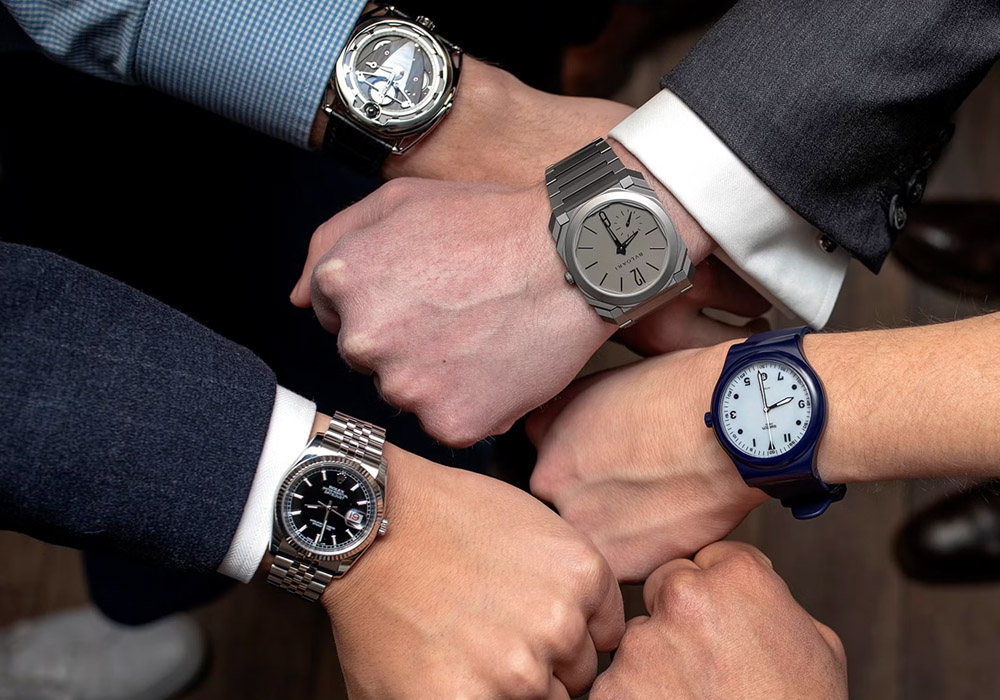
Small design choices make a major difference. Clean, light-colored dials often pair easily with business or formal clothing. Dark dials can feel sporty, dramatic, or versatile. Metal bracelets offer a sharper, more structured finish, while leather gives a softer, more traditional look. A colorful dial or unusual case shape can be a memorable statement, but it should still work with enough of your wardrobe to earn regular wrist time.
Set A Realistic Budget
Set a total budget before falling in love with a particular reference. Include taxes, insurance, future servicing, replacement straps, and possible repairs. A first luxury watch should usually be broad enough to wear often. A second watch can fill a specific role, such as travel, sports, or formal occasions. Collector-focused pieces may be more specialized, but a higher price does not automatically mean a better fit or a better daily companion.
Check Authenticity And Service Support
Buy from a seller with a clear reputation, transparent return terms, and complete documentation. For pre-owned watches, ask for the reference number, warranty information, service history, and detailed photographs. Check that the dial, case, movement, bracelet, and paperwork align with the stated model. An unusually low price can be tempting, but it may signal issues with the condition, replacement parts, or authenticity.
Plan For Long-Term Care
Daily care protects both appearance and reliability. Wipe the case and bracelet with a soft, dry cloth; avoid harsh chemicals and strong magnets; and store the watch in a dry, protected place when it is not being worn. If water resistance matters, have seals checked at appropriate intervals. Follow the manufacturer’s service advice because service timing depends on the movement, use, and condition of the watch.
Use A Final Buying Checklist
- Does the watch sit comfortably and stay balanced on your wrist?
- Can you read the time quickly in normal lighting?
- Does it work with most of your wardrobe?
- Is the movement appropriate for your routine?
- Are its materials durable enough for everyday use?
- Are warranty, return, and service options clear?
- Does the complete cost fit your budget?
- Would you still enjoy it if current trends changed?
Conclusion
The strongest luxury watch for everyday wear is one that feels natural from morning to night. Prioritize fit over fame, practicality over novelty, and long-term service support over decorative extras. When comfort, design, movement, durability, and budget come together, a luxury watch becomes more than a special-occasion purchase. It becomes part of daily life. A well-chosen timepiece should complement your wardrobe, suit your routine, and remain comfortable during long hours of wear. Consider how often you will use it, where you will wear it, and how easily it can be maintained over time. Rather than choosing solely because of a brand name or current trend, focus on qualities that will continue to matter years after the purchase. The right luxury watch should feel like a natural extension of your personal style while offering dependable performance, lasting appeal, and genuine enjoyment every time you put it on.