Now Reading: Underride Accidents: Why Commercial Trucking Crashes Are So Fatal
-
01
Underride Accidents: Why Commercial Trucking Crashes Are So Fatal

Key Takeaways
- An underride accident occurs when a smaller vehicle slides partly or fully beneath a truck or trailer.
- These crashes are especially dangerous because a passenger vehicle’s safety systems may not meet the truck’s structure at the right height.
- Rear, side, and front underride collisions can cause catastrophic head, neck, chest, and spinal injuries.
- Fault may involve more than the truck driver, including a motor carrier, maintenance provider, cargo company, or vehicle manufacturer.
- Fast action after a crash can help preserve evidence such as vehicle data, inspection records, camera footage, and witness accounts.
Underride accidents are among the most devastating types of commercial trucking crashes. They occur when a passenger car, SUV, motorcycle, or other smaller vehicle is driven beneath the body of a large truck, trailer, or semi-trailer. After a serious collision, speaking with a Las Vegas semi-truck accident lawyer may help an injured person or family understand which records should be preserved and which parties may be involved.
Unlike many ordinary rear-end collisions, an underride crash can place the upper portion of a smaller vehicle directly against the trailer’s underside, rear frame, or cargo area. This creates a severe mismatch between the vehicle structures and can defeat protections designed to work when two vehicles strike at similar bumper heights.
What Is an Underride Accident?
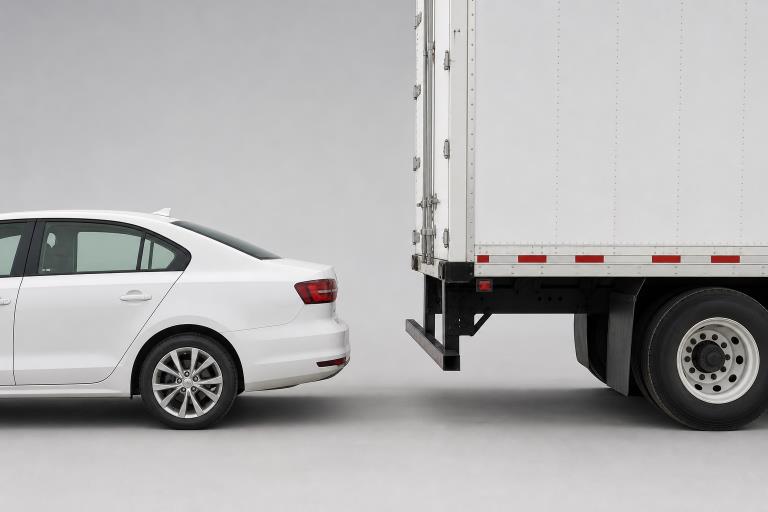
An underride accident is a collision in which part of a smaller vehicle travels underneath a larger commercial vehicle. The impact may occur at the rear of a trailer, along its side, or at the front of a truck. In the worst cases, the smaller vehicle can continue beneath the trailer far enough that the trailer body intrudes into the windshield, roofline, or passenger compartment.
Commercial trucks sit much higher off the ground than passenger vehicles. That height difference is central to the danger. A car’s bumper, crumple zone, airbags, and seat belts are engineered to manage crash forces in predictable locations. If the car slides below the truck instead, those systems may not have the opportunity to absorb the impact as intended.
Why These Crashes Are So Fatal
Underride crashes are often fatal because the point of contact can be above the smaller vehicle’s strongest protective structures. Rather than striking the car’s front bumper and engine compartment, a trailer can contact the windshield, roof, A-pillars, or occupant area. This may cause crushing injuries before airbags can provide meaningful protection.
Highway speeds make the consequences even more severe. A truck can take substantially longer to stop than a passenger vehicle, and a stopped, slow-moving, turning, or improperly parked trailer may be difficult to see at night or in poor weather. Sudden braking, limited visibility, distracted driving, and traffic congestion can leave a motorist with very little time to react.
Rear, Side, and Front Underride Collisions
Rear Underride
Rear underride occurs when a smaller vehicle strikes the back of a truck or trailer and slides beneath it. It may happen when a truck slows unexpectedly, stops in a travel lane, has inadequate lighting, or is difficult to see in rain, fog, darkness, or glare. Federal safety rules address rear impact guards on trailers and semi-trailers, but a guard’s presence does not automatically prevent every crash or determine the cause of a collision.
Side Underride
Side underride happens when a vehicle strikes or slides under the side of a truck or trailer. These crashes may occur during lane changes, wide turns, cross-traffic collisions, roadway merges, or when a trailer blocks a lane at night. Side impacts can be especially hazardous because many trailers have open space between their wheels and the trailer body.
Front Underride
Front underride occurs when a smaller vehicle goes beneath the front of a large truck. It can occur in head-on crashes, at intersections, or when a truck crosses into another lane. The truck’s height and weight may cause the smaller vehicle to be overridden or underridden rather than engage with its bumper and crash-management systems.
Common Causes Investigators Consider
Every collision requires a fact-specific investigation. An underride accident is not automatically the truck driver’s fault, but investigators commonly evaluate whether one or more of the following factors contributed:
- Speeding, following too closely, or delayed braking by either driver.
- Unsafe lane changes, turns, merges, or backing maneuvers.
- Driver fatigue, distraction, impairment, or inadequate training.
- Broken lights, missing reflective tape, or poor truck visibility.
- Improper parking, stopping, or loading in or near a travel lane.
- Defective brakes, tires, guards, lighting, or other truck components.
- Rain, fog, darkness, construction activity, road design, or obstructed sightlines.
The Role of Underride Guards
Underride guards are horizontal structures intended to keep smaller vehicles from traveling beneath a truck or trailer in certain crashes. Rear guards are commonly seen as the steel bar below the back of a trailer. Their condition, placement, strength, installation, and maintenance may become important issues after a rear underride collision.
Side underride protection remains an active safety subject. The federal Advisory Committee on Underride Protection was created to provide recommendations on regulations to reduce underride crashes and related fatalities. Even so, crash prevention still depends heavily on attentive driving, safe vehicle operation, visibility, roadway conditions, and proper maintenance.
Evidence That May Matter After a Crash
Commercial trucking cases often involve evidence that is controlled by several companies. Important information can be lost when vehicles are repaired, electronic systems overwrite data, or recordings are deleted in the ordinary course of business. Early documentation can be valuable, especially when the collision caused severe injuries or a fatality.
- Photos of vehicle damage, the trailer, lights, guards, roadway, debris, and tire marks.
- Police reports, witness names, dash-camera footage, and nearby surveillance video.
- Truck inspection reports, maintenance files, and repair invoices.
- Electronic logging data, GPS information, dispatch messages, and route records.
- Driver qualification, training, drug-testing, and hours-of-service records.
- Cargo documents, loading records, and evidence concerning trailer ownership.
Potentially Responsible Parties
The truck driver may be one important party, but commercial transportation frequently involves a web of businesses. Depending on the evidence and applicable law, responsibility may extend to the motor carrier, truck owner, trailer owner, leasing company, maintenance provider, cargo loader, shipper, broker, or manufacturer of a defective component. A company’s connection to the truck does not prove legal liability, but it may identify an important source of records.
What To Do After an Underride Accident
Safety and medical care come first. Call 911, move away from traffic if it is safe, and accept emergency evaluation when offered. Injuries involving the brain, spine, chest, or internal organs may not be obvious immediately, particularly after a traumatic collision.
If possible, preserve photographs, witness information, medical records, damaged property, and insurance correspondence. Avoid guessing about the fault at the scene or posting details online. A careful review of the crash, the truck’s condition, the involved companies, and the available electronic evidence can provide a clearer picture of how the underride accident occurred and what steps may follow.