Now Reading: Best Practices for Efficient Tankless Water Heater Installation
-
01
Best Practices for Efficient Tankless Water Heater Installation

Key Takeaways
- Assess your home’s hot water usage to determine the correct size for your tankless water heater.
- Verify all local building codes and permits before beginning installation.
- Upgrade the gas or electrical supply lines as needed to accommodate the new system.
- Select a location that maximizes efficiency and provides easy access.
- Plan venting carefully for optimal performance and safety.
- Prepare your installation area in advance to ensure a smooth process.
- Establish a regular maintenance schedule to extend the life of your unit.
Upgrading to a tankless water heater can transform your home’s hot water supply, offering improved energy efficiency and a reliable stream of hot water on demand. For homeowners ready to make the switch, understanding proper installation practices is essential to unlock the full potential of these systems. When considering tankless water heater installation in Provo, it’s vital not only to choose the right system but also to ensure it’s installed safely and efficiently for long-term performance.
A high-quality installation minimizes future maintenance issues, maximizes energy savings, and ensures your household enjoys seamless access to hot water. Read on to learn the essential steps and expert recommendations for a successful tankless water heater setup.
Assess Your Hot Water Needs
Begin your installation process by assessing your household’s hot water needs. List all fixtures and appliances that will need hot water, and estimate the peak simultaneous demand. This will determine the necessary flow rate and size of your tankless unit. Choosing a model that’s too small can leave you with inconsistent hot water, while an oversized system may result in higher upfront costs without real energy savings. For optimal results, consult with a professional plumber who can assess your situation and provide accurate sizing advice tailored to your home’s specific needs.
Ensure Compliance with Local Codes
Every installation must follow local building and plumbing codes to ensure safety and efficiency. Before purchasing a system, research your municipality’s requirements regarding venting, gas lines, or electrical specifications, as well as any necessary permits. Failing to comply with regulations can lead to delays, safety hazards, or voided warranties. It’s always a good idea to obtain the required permits before starting work and to schedule a final inspection for code compliance.
Verify Gas and Electrical Supply
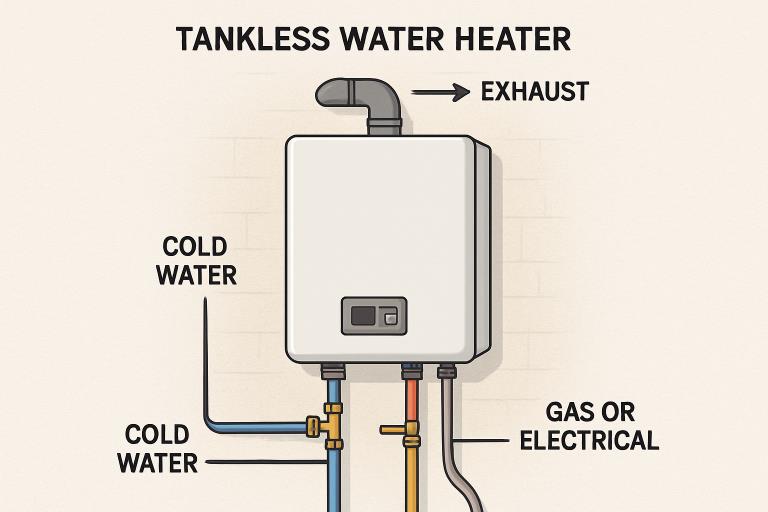
Unlike traditional tank water heaters, tankless models often need substantial gas or electrical capacity. Gas-powered systems, for example, typically require a ¾-inch gas line to ensure the necessary BTU output. Electric models may need upgraded breakers or dedicated circuits to handle their amperage. If you’re upgrading from a tank heater, your current supply lines might not be sufficient. Have a licensed professional check and upgrade your utility infrastructure if required. Undersized supply lines are one of the most common installation issues with tankless water heaters.
Choose an Optimal Location
Tankless units are compact, opening up new placement possibilities compared to bulky tanks. For maximum efficiency, install the heater close to the hot water outlets with the most frequent use, such as kitchens and bathrooms. This minimizes heat loss in pipes and reduces wait times. The installation site should allow for easy maintenance access and proper venting. In some regions, outdoor installation is an option—saving interior space and simplifying venting, but always protect outdoor units from the elements.
Plan for Proper Venting
Correct venting is critical for safety and functionality. Tankless water heaters need to expel combustion gases efficiently, which may require specialized vent materials specified by the manufacturer. Direct vent systems draw air from outdoors and are the preferred option for indoor installations. Power vent units can utilize indoor air, but they require careful placement to prevent drafts or recirculating exhaust. Many homeowners opt for sidewall venting to minimize installation costs.
Prepare the Installation Area
On installation day, the work area should be clean and clear of obstructions. Verify that the chosen wall, floor, or outdoor location is structurally sound enough to support the unit and will not be compromised by heat or moisture over time. All pipe, gas, electrical, and venting connections should be laid out in advance. Easy access for the installer makes the process smoother and faster, reducing delays and future service challenges.
Regular Maintenance
Investing in routine maintenance is key to a long-lasting tankless water heater. Regularly flush your system to prevent mineral buildup, especially in areas with hard water. Test for leaks, inspect vent connections, and refer to the manufacturer’s service guidelines for further instructions. Scheduling annual professional service will help maintain not just optimal performance but also your product warranty for years to come.
Conclusion
Switching to a tankless water heater offers long-term benefits, but success starts with proper planning and installation. By assessing your home’s needs, adhering to local codes, and ensuring the correct utility upgrades, you can maximize performance and efficiency. With routine maintenance and careful setup, your system will provide dependable hot water for years to come.