Now Reading: Holding Trucking Companies Accountable for Driver Negligence
-
01
Holding Trucking Companies Accountable for Driver Negligence

Key Takeaways
- Trucking companies can be held liable for accidents caused by their drivers under various legal doctrines.
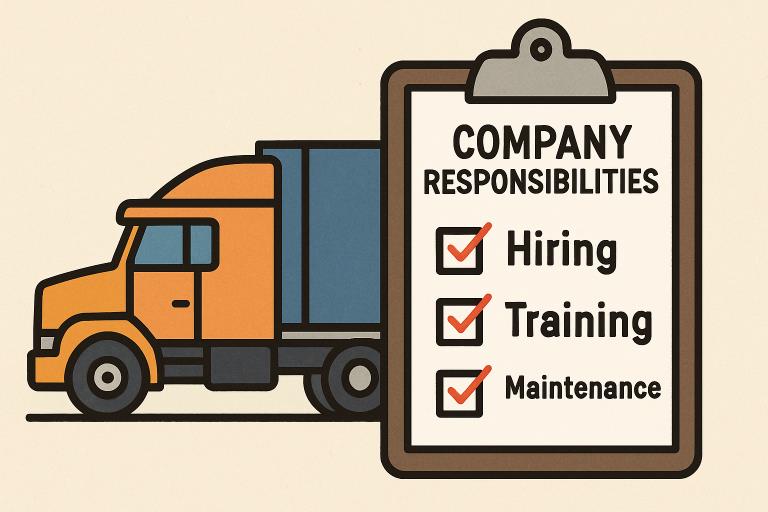
- Negligent hiring, inadequate training, and poor maintenance practices are common grounds for company liability.
- Recent legal developments in some states have made it more challenging to sue trucking companies.
- Understanding the legal landscape is crucial for victims seeking justice and compensation.
Understanding Trucking Company Liability
When a commercial truck is involved in an accident, determining the cause and assigning responsibility goes beyond the driver’s actions alone. The law recognizes that a trucking company may also be accountable, especially under the doctrine of vicarious liability, which holds employers liable for wrongful acts committed by employees in the course of their employment. In other words, if a truck driver causes a crash while on duty, the company may be required to compensate those injured. For many victims navigating next steps, reaching out to a qualified commercial truck accident attorney can provide clarity and help protect their rights from the outset.
This passage discusses the accountability of trucking companies for unsafe conduct that may arise not only from drivers’ direct actions but also from corporate policies, hiring practices, and safety oversight. It highlights that large commercial vehicles pose significant risks due to their weight and potential to cause harm, necessitating stringent adherence to operational responsibilities such as training and vehicle maintenance. The legal system emphasizes the importance of corporate accountability in preventing road tragedies and notes that failures in this regard can lead to serious consequences, including regulatory scrutiny and reputational damage within the industry.
Common Grounds for Company Liability
Three major areas often underpin lawsuits and claims against trucking companies following crashes. First, negligent hiring can expose companies if they employ drivers with prior records of dangerous driving, substance abuse, or license suspensions. Overlooking such crucial background checks puts everyone on the road at risk. For example, if a company hires a truck driver with a repeated history of DUI offenses, and that driver causes a serious collision, the company’s hiring practices are directly implicated.
Second, inadequate training and supervision can foster unsafe driving habits. Truck drivers are subject to complex regulations covering weight limits, the transport of hazardous materials, and required rest breaks. Companies that fail to properly train drivers or provide routine oversight may find themselves liable for resulting accidents. Safety protocols are only effective if drivers are adequately prepared and procedures are regularly reinforced.
Poor vehicle maintenance is the third major area of concern. Because trucks rack up enormous mileage under demanding conditions, failing to accurately track maintenance schedules or promptly address mechanical issues can have deadly consequences. Worn brakes, underinflated tires, or ineffective lighting equipment can all contribute to avoidable accidents. The National Highway Traffic Safety Administration underscores that a significant share of fatal truck crashes is caused by vehicle-related factors, underscoring the need for aggressive maintenance and adherence to federal standards.
Legal Challenges in Holding Companies Accountable
The legal landscape for holding trucking companies liable is evolving in several parts of the country. Texas, for example, passed legislation in 2021 that affects how plaintiffs can sue trucking companies. Under this law, a claimant must first prove the driver was responsible before advancing to a second stage that addresses potential company negligence. This separation complicates litigation and can delay compensation, presenting additional hurdles for victims seeking justice. Other states have debated or enacted legislation to limit direct actions against transportation firms, reflecting industry lobbying and concerns about rising insurance costs. Those affected by truck accidents should remain vigilant to these shifting legal standards, which can alter how and when they pursue claims.
Case Studies Highlighting Company Negligence
High-profile cases highlight the tragic impact of trucking company negligence. In 2019, a horrific collision in New Hampshire killed seven motorcyclists when a commercial truck, operated by a driver with a troubling driving record, veered into their group. Investigations revealed the trucking company had ignored warning signs about the driver’s past. Ultimately, the company’s owner faced criminal penalties for making false statements. Incidents such as this demonstrate why regulatory safeguards and judicial scrutiny are necessary to prevent similar tragedies.
Media investigations and government reports often uncover patterns of systematic neglect leading up to such accidents. Families hurt by these incidents sometimes band together to advocate for tougher federal oversight, highlighting the critical importance of holding trucking companies accountable and driving improvements in industry practices.
Steps to Pursue Legal Action
- Seek Immediate Medical Attention:Medical records play a vital role in both recovery and legal proceedings. Anyone involved in a truck accident should get checked for injuries, even if symptoms are not immediately apparent.
- Gather Evidence:Taking photographs, collecting witness information, and securing police reports can immensely strengthen a future claim. Physical evidence and documentation are crucial for reconstructing what happened and establishing liability.
- Consult Legal Professionals:Trucking accidents involve intricate questions of state and federal law, insurance, and corporate policies. An attorney experienced in such cases can help victims navigate the complexities, communicate with insurance carriers, and pursue just compensation.
The Role of Federal Regulations
Federal regulations, especially those set by the Federal Motor Carrier Safety Administration (FMCSA), shape many aspects of trucking company accountability. These rules dictate hours of service, background checks, drug and alcohol screening, and ongoing vehicle inspections. If a company disregards these rules or falsifies required records, plaintiffs may use such breaches as compelling evidence of corporate negligence. Regulatory compliance is mandatory in the commercial transportation sector, and violations can result in stiff penalties and civil liability.
Conclusion
Accountability is essential to improving safety on the nation’s roads and highways. Enforcing standards for trucking companies ensures not only that individual drivers act responsibly, but also that entire organizations prioritize safety in their operations. Victims of negligence, by understanding their rights and working with experienced legal counsel, can stand up to even the largest trucking companies. These efforts serve a broader public good, helping to prevent future accidents and making American roadways safer for everyone.