Now Reading: How to Choose the Right Backsplash for Any Room
-
01
How to Choose the Right Backsplash for Any Room

Key Takeaways
- Choose a backsplash based on the room’s daily use and conditions.
- Compare materials for durability, maintenance, moisture, and heat resistance.
- Coordinate tile color and pattern with cabinets, countertops, flooring, and lighting.
- Plan the tile layout, grout color, edges, outlets, and transitions before installation.
- Consider the full project cost, including materials, labor, preparation, and cleanup.
- Use physical samples to check how colors and textures look in different lighting.
- Confirm material suitability for kitchens, bathrooms, and fireplace surrounds.
- Prioritize a backsplash that balances style, function, budget, and long-term upkeep.
A backsplash does more than finish a wall. It helps protect surfaces from water, food splatters, grease, soap, and everyday marks while tying together cabinets, countertops, fixtures, and paint colors. Whether a project calls for professional backsplash installation or a carefully planned update to a smaller space, the best choice begins with how the room is actually used. Style still matters, but function should lead the decision. A kitchen range wall faces different conditions than a bathroom vanity or fireplace surround, so the material, finish, grout, and layout should fit the location rather than follow a passing trend.
Why Backsplashes Matter Beyond Style
Walls near sinks, counters, and cooking surfaces are exposed to more wear than most painted areas. A durable, cleanable backsplash creates a practical barrier and can reduce the worry that comes with regular wiping, splashing, and food preparation. It also creates a visual bridge between the larger finishes in a room. A simple tile can calm a dramatic countertop, while an expressive wall surface can bring personality to plain cabinetry. The strongest designs consider the entire room rather than treating the backsplash as an isolated purchase. Look at countertop veining, cabinet undertones, hardware, flooring, and lighting together before committing to a tile.
Start With the Room and Its Daily Use
Before shopping, define what the surface needs to handle. Ask whether it will be exposed to grease, steam, standing water, dry heat, or frequent scrubbing. Consider how much daylight reaches the wall, whether the room already has busy finishes, and how long you expect to live with the design. These answers narrow the options quickly and help prevent a beautiful material from becoming a high-maintenance regret.
Choose the Right Backsplash Material
Material affects appearance, cleaning routines, installation difficulty, and long-term upkeep. There is no universal best choice, but several options work well in many homes.
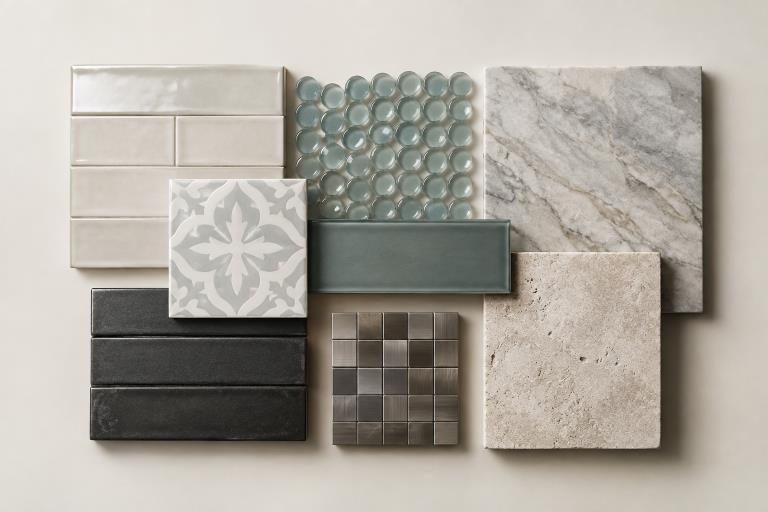
- Ceramic tile: Available in a wide range of colors, shapes, and finishes, ceramic tile offers flexibility for traditional, modern, and eclectic spaces.
- Porcelain tile: A dense tile choice that works well in moisture-prone areas and can mimic stone, concrete, or other surfaces.
- Glass tile: Its reflective surface can brighten compact kitchens and bathrooms, although installation requires careful preparation.
- Natural stone: Marble, travertine, slate, and similar materials bring natural variation, but some stones need sealing and gentler cleaning products.
- Large-format slabs: Slabs create a continuous look with fewer grout lines and can make a wall feel calm and expansive.
- Metal accents: Stainless steel, brass, or other metal details can add contrast, especially when used as a focused feature rather than across every wall.
For homeowners who want a more current look without copying a short-lived fad, recent coverage of warmer colors and dimensional surfaces shows how tile is moving toward earthy palettes, handmade character, and more personalized combinations.
Balance Color, Pattern, and Texture
A backsplash should share visual attention with the rest of the room, not compete with every finish. If the countertop has bold veining or strong movement, a quieter tile often creates better balance. If cabinets and counters are simple, a patterned tile or a richer color can become the focal point.
- Pair warm wood cabinetry with cream, tan, terracotta, muted green, or soft blue tones.
- Use a simple field tile when floors or counters already have a strong pattern.
- Choose a textured finish carefully near grease or soap, where raised surfaces may require more detailed cleaning.
- View samples beside the actual cabinet and countertop materials in daylight and under evening lighting.
Plan the Layout, Height, and Grout
Tile layout can change the character of a backsplash as much as the tile itself. Stacked layouts feel orderly and contemporary. Offset layouts offer a familiar, relaxed appearance. Herringbone adds movement, while vertical placement can emphasize height. Small mosaics work well for compact detail, and larger tiles or slabs reduce visible grout lines. Grout deserves equal attention. Matching grout creates a more continuous surface, while contrasting grout highlights each tile and makes the pattern more noticeable. Darker grout can be forgiving in high-traffic areas, but it also creates more pronounced visual lines. Plan edge trim, outlet cuts, corners, and movement joints before ordering materials.
Backsplash Ideas by Room
Kitchen
Kitchens need surfaces that can handle food splashes, grease, steam, and routine cleaning. The wall behind the range often works well as a focal point, especially when the rest of the backsplash is simple. Extending tile to the underside of upper cabinets, or even to the ceiling on a feature wall, can make the room feel more intentional.
Bathroom
Bathroom backsplashes should prioritize moisture resistance and easy upkeep. Because powder rooms and small baths have less wall area, they can often support deeper color, a patterned mosaic, or tactile tile without overwhelming the space. Coordinate the wall with the vanity, mirror, faucet finish, and shower tile for a connected result.
Fireplace
A fireplace surround calls for a material approved for the heat exposure it will experience. Scale matters here. Large-format tile can make a tall surround feel streamlined, while textured or reflective material can add depth to a simple living room. Always confirm the manufacturer’s suitability guidance before installation.
Plan for Budget and Installation
Material price is only one part of the project. A realistic budget should also include demolition, wall repair, surface preparation, adhesive, grout, sealant, trim pieces, and cleanup. Labor can increase when a layout requires many cuts around outlets, windows, corners, cabinets, or intricate patterns. Fragile materials and small mosaics may also take more time to install than standard field tile.
Common Backsplash Mistakes to Avoid
- Choosing tile before reviewing countertop, cabinet, floor, and paint samples together.
- Relying on online images without seeing a physical sample.
- Leaving grout color until the final stage.
- Selecting porous stone without planning for sealing and maintenance.
- Using a pattern that feels too busy for the available wall area.
- Overlooking outlets, switches, edges, trim, and transitions.
- Assuming every wall finish is appropriate behind a range or around a fireplace.
A Simple Backsplash Selection Checklist
- Measure the wall area and allow extra material for cuts and breakage.
- Gather samples of cabinets, counters, flooring, and paint.
- Compare samples in morning, afternoon, and artificial light.
- Choose a material that suits the room’s moisture, heat, stain, and cleaning demands.
- Decide on layout, grout color, and edge details before ordering.
- Review installation requirements and confirm the full project budget.
Final Thoughts
A successful backsplash balances durability, maintenance, budget, and personality. The right choice is not necessarily the boldest, the newest, or the most expensive. It is the surface that works for daily life, complements the rest of the room, and still feels like a natural part of the home years after installation. Homeowners should also consider how often the kitchen or bathroom is used, how much cleaning the surface will require, and whether the material can handle moisture, heat, splashes, and everyday wear. Color, texture, pattern, grout selection, and installation quality can also affect the finished appearance and long-term upkeep. By considering these practical details alongside personal style, homeowners can choose a backsplash that adds visual interest while remaining functional, manageable, and suitable for the space’s overall design.