Now Reading: Innovative Commercial HVAC Trends Shaping Modern Workplaces
-
01
Innovative Commercial HVAC Trends Shaping Modern Workplaces

Key Takeaways
- Adoption of low-GWP refrigerants is reshaping the design and application of HVAC systems in commercial spaces.
- Smart technologies and IoT enable real-time monitoring for predictive maintenance and energy management.
- Improving indoor air quality is now integral to HVAC upgrades, with advanced filtration and purification features leading the way.
- Electrification and hybrid systems are vital to creating sustainable, energy-efficient workplaces.
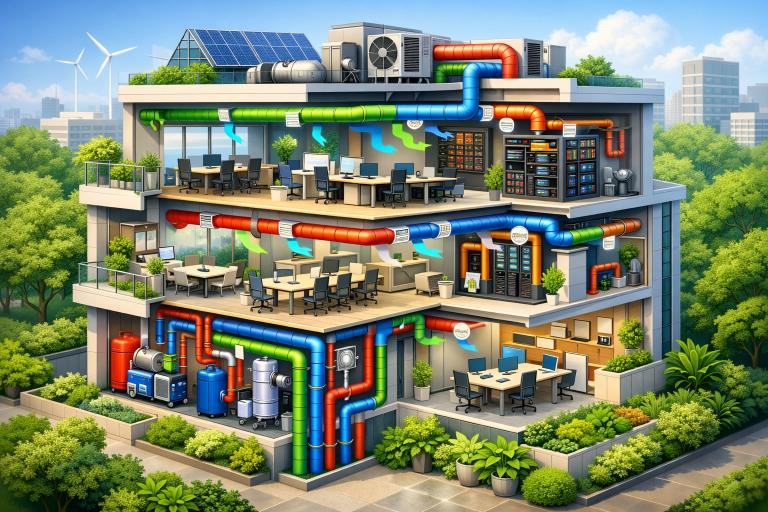
As workplaces transform to meet new productivity, health, and sustainability standards, commercial HVAC (Heating, Ventilation, and Air Conditioning) technologies are becoming more advanced and essential. The rapid pace of innovation is not only making buildings more energy-efficient but also improving workplace comfort and air quality, directly impacting occupant well-being and operational efficiency. For those looking to optimize their current systems or embark on a new installation, there are several key developments to know. To learn more about how commercial HVAC solutions can benefit your business, start by understanding the latest trends reshaping the industry.
Commercial HVAC is now a critical cornerstone for operational sustainability. Staying ahead of regulatory mandates, integrating intelligent technology, and supporting healthier indoor environments are challenges that facility managers and building owners can no longer ignore. From new refrigerants to advanced system analytics, the latest innovations are helping facilities not just comply with environmental standards but also increase overall building value and comfort.
This commitment to efficiency and occupant well-being is evident in the rise of smart building systems and eco-friendly materials. Modern HVAC equipment is designed not only for energy savings and environmental stewardship but also for seamless integration with building management platforms. The transition is driving a new standard for workplace performance and sustainability, setting the stage for future-ready commercial spaces.
Transition to Low-GWP Refrigerants
Heightened environmental regulations are compelling the HVAC industry to adopt refrigerants with lower Global Warming Potentials (GWPs). Traditional refrigerants like R-410A, which have long been standard in most systems, are being phased out due to their high GWP values. In their place, alternatives such as R-32, which has a much lower GWP, are being widely adopted. This transition not only helps businesses achieve regulatory compliance but also reduces their overall environmental impact. Adopting next-generation refrigerants typically requires redesigning existing systems, putting pressure on manufacturers and service providers to update their offerings and training resources.
Integration of Smart HVAC Systems
The introduction of smart technology is proving transformative for commercial HVAC. Internet of Things (IoT) enabled devices and AI-powered sensors provide real-time data on system performance. This data enables facilities teams to detect small issues before they escalate into costly repairs and to optimize equipment operations to minimize energy costs. Predictive maintenance tools use analytics to anticipate parts failure or capacity shortfalls, reducing downtime and extending equipment lifespan. Furthermore, these intelligent systems can automate temperature and ventilation adjustments based on occupancy, making comfort and efficiency easier to achieve.
Enhanced Focus on Indoor Air Quality
The COVID-19 pandemic has made indoor air quality (IAQ) a top priority. Businesses are investing in HVAC upgrades that incorporate advanced filtration media and ultraviolet purification systems, both designed to remove pathogens and improve airflow. Modernized IAQ solutions are not just for health emergencies; they now support regular operations by ensuring workplaces are safe, productive, and comfortable year-round. This focus on cleaner air is influencing building design choices, with centralized air quality controls becoming a sought-after feature in new commercial construction. According to the Centers for Disease Control and Prevention, effective ventilation and filtration are proven to reduce indoor airborne contaminants.
Electrification and Hybrid Systems
The movement toward lower carbon emissions is accelerating the transition to all-electric and hybrid commercial HVAC systems. Hybrid Variable Refrigerant Flow (VRF) technology, which uses water rather than additional refrigerants for indoor heat transfer, delivers significant efficiency gains and reduces the environmental footprint. Electrification not only supports local and national sustainability goals but also provides building owners with competitive operational advantages. Energy costs can be better controlled, and compliance with evolving building codes is easier to maintain, making electrification a practical and strategic move for forward-thinking businesses.
Workforce Development and Training
With constant technological advancements, a highly skilled workforce is more important than ever for installing and servicing modern HVAC equipment. Investing in ongoing education ensures that technicians stay up to date with the latest technologies, safety standards, and system requirements. Employers are turning to extensive in-house training, manufacturer certification programs, and industry apprenticeships to fill the knowledge gap and maintain consistent service quality. These investments are vital not only for operational reliability but also for achieving efficiency and sustainability targets in today’s buildings.
Conclusion
Commercial HVAC technology is advancing swiftly to meet new demands for sustainability, health, and efficiency. Building owners and managers who proactively adopt low-GWP refrigerants, integrate smart systems, enhance air quality, electrify heating and cooling, and invest in workforce development are positioning their facilities for future success. These innovations provide more than environmental or regulatory compliance; they create healthier, more comfortable, and more productive workplaces for everyone involved.