Now Reading: How to Future-Proof Commercial Construction: Strategies for Resilient Buildings
-
01
How to Future-Proof Commercial Construction: Strategies for Resilient Buildings
How to Future-Proof Commercial Construction: Strategies for Resilient Buildings

Key Takeaways
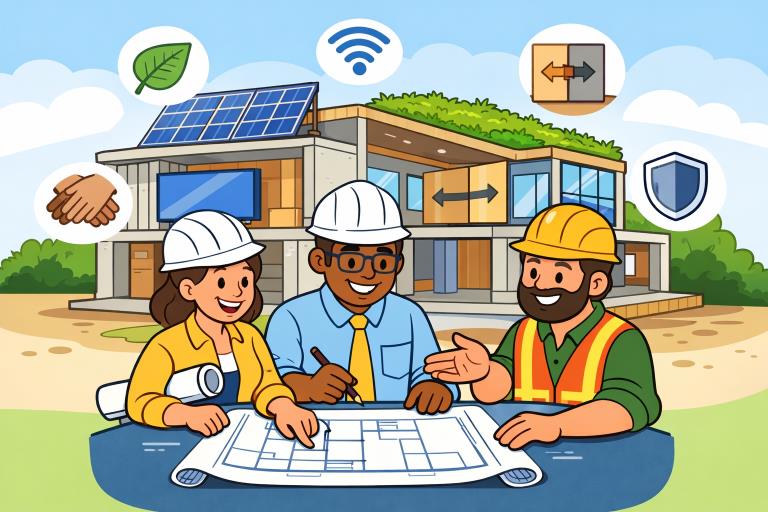
- Sustainability enhances building efficiency and ensures regulatory compliance.
- Smart technology adoption streamlines building operation and improves occupant comfort.
- Flexible design keeps spaces responsive to future tenant requirements.
- Resilient materials and modern building methods promote durability and minimize life-cycle costs.
- Collaborative project management sparks innovation and ensures the successful delivery of future-proof projects.
In the ever-evolving world of commercial construction, success hinges on anticipating change and building spaces that are ready for new demands. Developers, architects, and contractors are adopting holistic strategies to ensure their projects remain adaptable, energy-efficient, and competitive in the years ahead. By leveraging advanced construction methods and innovative design, commercial buildings can be positioned to provide lasting value and operational stability. For those interested in expanding their knowledge on industry best practices, you can learn more.
Commercial construction is no longer about simply erecting structures; it is about creating future-ready spaces that meet today’s expectations while providing the flexibility and resilience demanded by tomorrow. Owners and tenants alike prioritize sustainability, technological integration, and the ability to adapt spaces for multiple uses. This article explores the essential strategies for future-proofing commercial buildings, so they stand the test of time in both performance and financial value.
Embracing Sustainable Practices
Environmental responsibility is at the heart of modern commercial construction. Regulatory pressures and consumer demand for greener buildings are accelerating the adoption of sustainable strategies across new projects and retrofits. Emphasizing energy efficiency through advanced insulation, high-performance windows, and renewable energy systems not only cuts operational costs but also increases property value. The desire for net-zero developments is transforming industry standards, as shown by the growing number of buildings designed to generate as much energy as they consume. These sustainable advancements drive compliance, favorable financing, and stronger tenant engagement. According to the U.S. Green Building Council, LEED-certified buildings show higher occupant satisfaction and lower lifecycle impacts than conventional counterparts. Incorporating sustainable solutions such as rainwater harvesting, natural ventilation, and LED lighting systems further enhances these benefits, helping property owners stay ahead as expectations shift and regulations tighten. Proactive adoption of eco-friendly practices creates buildings that are both responsible and profitable.
Integrating Smart Technologies
The rise of smart building technologies has revolutionized how commercial spaces are operated and maintained. Automated systems can optimize lighting, HVAC, and security based on real-time occupancy data, reducing waste and improving occupant experience. The integration of IoT (Internet of Things) sensors enables continuous monitoring of building performance and conditions, providing actionable insights that enable predictive maintenance and more efficient space utilization. These upgrades drive substantial operational savings and elevate asset value over time. According to a Forbes study, smart building solutions can achieve energy savings of up to 30 percent while providing superior tenant comfort and safety. As more businesses seek technologically advanced workspaces, investment in these technologies will remain a key differentiator in the commercial real estate market.
Designing for Flexibility
Commercial spaces must be agile. Increasingly, tenants are seeking layouts that adapt to changes in workforce size, business functions, and emerging technologies. Flexible design features, such as open-plan arrangements, movable partitions, and modular infrastructure, enable rapid transformation without the need for lengthy or expensive renovations. These strategies allow developers to attract a wider range of tenants, extend the functional lifespan of their properties, and quickly respond to shifts in market demand. Design flexibility also prepares a building for upgrades as new investments in technology and sustainability become practical. Adaptive infrastructure ensures the building can support new systems and functions with minimal disruption.
Utilizing Resilient Materials and Methods
Material and method choices have a profound effect on the longevity and durability of commercial buildings. Structures designed to withstand extreme weather events, wear from high traffic, and various environmental stressors tend to experience lower repair costs and fewer disruptions. High-quality concrete, impact-resistant windows, and other advanced materials are proving critical in extending the useful life of modern buildings. Innovative construction methods, such as prefabrication and modular assembly, further enhance resilience by minimizing errors, shortening construction times, and producing more uniform results. Selecting materials and techniques with proven durability helps safeguard investments and reduce the resources required for ongoing maintenance.
Implementing Collaborative Project Management
Modern project management leverages collaboration and digital solutions to keep complex commercial projects on track. The use of Building Information Modeling (BIM) allows all stakeholders, from architects to engineers and contractors, to work from the same unified plan. This minimizes miscommunication, reduces costly mistakes, and accelerates delivery timelines. Collaboration early and often in the construction process ensures that design goals for sustainability, technology, and flexibility are thoroughly integrated into every project phase. This approach not only fosters innovation but also delivers outcomes that meet or exceed long-term client objectives.
Conclusion
Future-proofing commercial construction is a dynamic, ongoing process. By focusing on sustainable design, advanced technology, adaptable layouts, resilient materials, and collaborative project management, commercial properties can be created to efficiently and cost-effectively serve evolving needs. By adopting these strategies, industry professionals can position their buildings for lasting relevance and value in a changing marketplace.