Now Reading: Modern Warehousing Solutions: Driving Efficiency and Sustainability in Today’s Supply Chains
-
01
Modern Warehousing Solutions: Driving Efficiency and Sustainability in Today’s Supply Chains
Modern Warehousing Solutions: Driving Efficiency and Sustainability in Today’s Supply Chains

Key Takeaways
- Automation and robotics are transforming warehouse operations, improving efficiency and reducing reliance on labor.
- Artificial Intelligence (AI) and data analytics deliver actionable insights, supporting better inventory and workflow management.
- Sustainable warehousing practices lower environmental impact and costs for businesses of all sizes.
- Adopting advanced technologies in warehousing helps companies remain agile and resilient amid shifting market conditions.
In the rapidly evolving landscape of global commerce, supply chains depend on advanced warehousing solutions to keep pace with growing consumer expectations and complex market demands. Warehousing is no longer limited to simply storing goods; it has become a critical piece in optimizing supply chain efficiency, inventory accuracy, and operational agility. As companies in major distribution hubs like Warehouse Phoenix AZ, illustrate, investing in modern warehousing is foundational to maintaining a competitive edge and ensuring customer satisfaction across increasingly interconnected markets.
Contemporary warehouses are embracing cutting-edge technologies and sustainable best practices that fundamentally transform how goods are handled, stored, and shipped. From automation and robotics to the integration of artificial intelligence tools, today’s facilities are designed to minimize errors, maximize throughput, and promote a more resilient supply chain. This transformation means businesses can deliver faster, respond to unforeseen disruptions effectively, and reduce both costs and carbon footprints in their day-to-day operations.
Efficient warehousing sets the tone for downstream activities throughout the supply chain. The adoption of new warehousing models, such as fulfillment-as-a-service and specialized third-party logistics, further enhances flexibility and scalability for businesses of all sizes. Leveraging advanced logistics partners unlocks new growth opportunities, particularly as consumer needs shift with market trends.
For organizations seeking high-performance logistics solutions, evaluating third party warehousing companies offers a path to improved efficiency and seamless integration with distribution networks nationwide. Choosing the right warehousing partner can make all the difference in simplifying supply chain complexity and unlocking new value for your business.
The Rise of Automation and Robotics
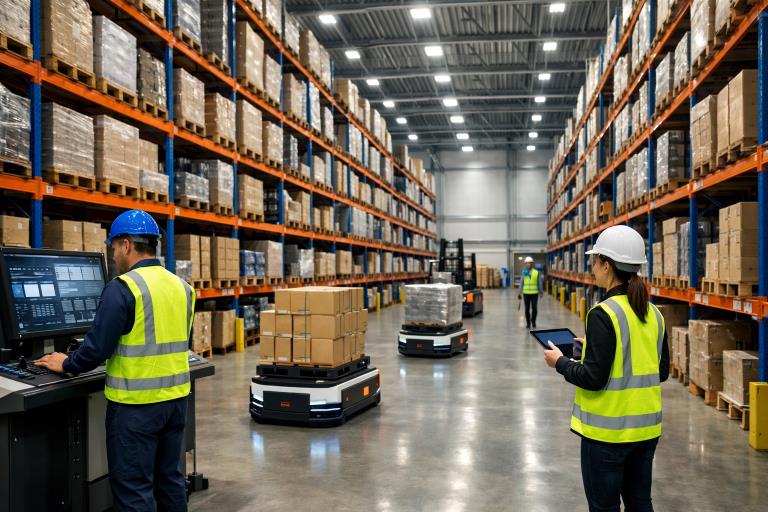
Automation is reshaping warehouse operations by introducing robotics, automated guided vehicles, and intelligent conveyor systems to handle repetitive or hazardous tasks. Facilities that use automation can process orders more quickly, reduce human error, address labor shortages, and lower operational costs. Industry experts project that an increasing percentage of new warehouses will incorporate robots and AI-driven machinery over the coming decade, especially in major logistics regions. These advancements not only increase throughput but also allow staff to focus on higher-level tasks that require human problem-solving and oversight. According to TechRadar, there has been a surge in investment in automation technologies as companies seek to improve reliability and scalability in their supply chains.
Harnessing the Power of Artificial Intelligence
Artificial Intelligence is revolutionizing warehousing by enabling real-time data processing, predictive analytics, and advanced inventory optimization. AI-driven systems can anticipate demand shifts and recommend timely adjustments to stock levels, replenishment cycles, and picking strategies. These capabilities not only enhance order accuracy but also accelerate fulfillment, creating a more responsive and customer-centric operation. Integrating AI tools into warehouse management systems allows operators to analyze supply and demand cycles, identify trends, and reduce overstock or stockouts. Large enterprises and innovative logistics providers are already proving the value of AI by achieving lower error rates and higher customer satisfaction. More on AI’s impact on supply chain logistics can be found in Forbes.
Embracing Sustainability in Warehousing
Sustainability is an urgent priority for businesses and customers alike. Warehouses are meeting this demand by investing in energy-efficient equipment, renewable energy sources such as solar power, and comprehensive waste-reduction programs. Green building practices, intelligent lighting systems, and low-emission materials reduce facilities’ energy consumption and operational costs while supporting corporate sustainability goals. This shift toward sustainability not only benefits the environment but also helps companies appeal to environmentally conscious consumers and adhere to stricter regulatory requirements. Major industry leaders now view sustainability as a core strategic objective rather than a secondary concern, as TechRadar highlights.
Enhancing Supply Chain Resilience and Agility
Embracing advanced technologies in warehousing enhances resilience and agility at every level of the supply chain. Real-time tracking systems, cloud-based data platforms, and integrated analytics tools empower businesses to react promptly to supply disruptions, shifts in consumer demand, and unexpected risks. Enhanced agility enables companies to reroute shipments, shift inventory, or adjust fulfillment priorities almost instantly, minimizing downtime and lost revenue. These capabilities are not only vital for surviving crises, such as global health emergencies or geopolitical disruptions, but are also key for capitalizing on new opportunities as markets evolve. As businesses navigate a more volatile commercial landscape, prioritizing resilience in warehouse operations provides a crucial safety net and a competitive advantage.
Conclusion
Modern warehousing solutions underpin robust, efficient, and sustainable supply chains. By deploying automation, harnessing AI, and integrating sustainable practices, businesses improve accuracy and responsiveness throughout their logistics networks. As the warehousing industry continues to innovate, companies dedicated to ongoing adaptation and technology adoption will be best positioned to lead in efficiency, customer satisfaction, and environmental stewardship.