Now Reading: Planning a Pool and Outdoor Living Space in Tampa Bay, Florida
-
01
Planning a Pool and Outdoor Living Space in Tampa Bay, Florida

Key Takeaways
- Plan around the backyard’s sun, drainage, access, setbacks, and daily traffic patterns before choosing a pool shape.
- Tampa Bay heat, humidity, summer rain, and storm exposure should influence materials, equipment placement, and shade planning.
- Build safety and drainage into the first design, rather than attempting to add them after construction begins.
- Compare complete project scopes, not just starting prices, because decks, permits, electrical work, landscaping, and equipment affect the final investment.
A successful Florida pool project begins with the property itself. In Tampa Bay, a backyard needs to work through sunny afternoons, sudden downpours, humid evenings, and the regular comings and goings of family life. The best layouts create room not only for swimming, but also for safe walking paths, seating, storage, maintenance access, and water management.
Homeowners evaluating a full-service design process can look to Tampa Bay Pools, a custom in-ground pool and outdoor living builder serving Brandon, the greater Tampa Bay area, and surrounding communities. Its published process includes 3-D pool planning, material selection, permitting and engineering coordination, construction management, spas, screened enclosures, decking, and other connected backyard features, making it a useful example of why pool planning should consider the entire outdoor space instead of the vessel alone.
Start With the Yard, Not the Pool Shape
Before selecting a rectangular, freeform, geometric, or compact pool, study what the yard can realistically support. Confirm property lines, easements, utility locations, setback requirements, trees, fences, and access for construction equipment. A pool that looks ideal on a drawing can feel cramped if it leaves too little deck space for loungers, dining, or a clear route from the back door.
Walk the yard at different times of day. Notice where the morning and afternoon sun falls, which areas are shaded by the house or trees, and where wind tends to move through the space. A family that swims after dinner may prioritize western exposure and layered lighting, while parents of young children may want shaded seating with a clear view of the shallow end.
Address Drainage and Elevation Before Excavation
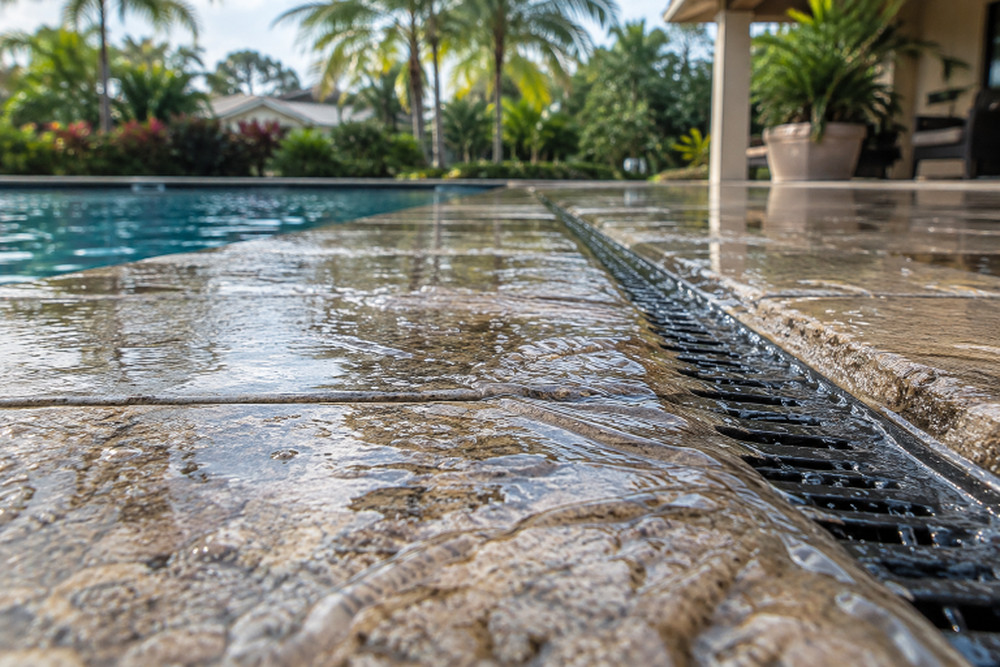
Heavy rain can quickly reveal weak grading. New decks, patios, screens, and landscape borders can alter the way water crosses a yard, so the pool plan should account for deck slope, downspouts, swales, drains, overflow routes, and the relationship between finished surfaces and the home. Ask where runoff will go during a major storm and whether any irrigation, sod, fencing, or planting beds will need repair after construction.
Drainage Questions to Ask
- How will the finished deck direct water away from the house and pool equipment?
- Are there visible low spots, standing water, or drainage paths that must remain open?
- Could groundwater, soil conditions, or flood exposure affect excavation or design?
- Which drainage improvements are included in the written scope?
Broader household storm planning also matters in coastal and inland Florida communities. The Florida Division of Emergency Management provides statewide preparedness information that can help homeowners think beyond ordinary backyard conditions.
Match the Pool to Daily Use
Pool size should reflect how the household will use it. A lap-style design can suit a narrow yard and regular exercise. A compact plunge pool may preserve more space for an outdoor kitchen or dining zone. Freeform pools can soften a lush landscape, while clean-lined geometric pools often pair naturally with contemporary architecture.
Mark the proposed footprint with tape, string, or temporary marking paint before final approval. Then stand at the back door, walk the future deck path, and picture furniture in place. A smaller pool with a generous sun shelf, bench seating, and usable deck space may serve a family better than a larger pool that consumes the entire yard.
Make Safety Part of the Initial Design
Safety should guide the layout from the beginning. Florida law requires a new residential pool to have at least one approved safety feature before final inspection and certificate of completion, with options that include a compliant enclosure, approved safety cover, exit alarms, self-closing and self-latching doors, or a qualifying pool alarm under Florida’s residential pool safety requirements.
Many households choose multiple layers of protection, such as barriers, alarms, gates, covers, and clear sightlines. Keep furniture, planters, toys, and climbable items away from barriers. Separate grilling and food preparation areas from wet, high-traffic paths when possible. Physical safeguards are important, but they do not replace attentive adult supervision, swimming skills, and household water-safety habits.
Choose Features and Materials With Maintenance in Mind
List features by purpose before selecting them. A sun shelf and bubblers may support young children and relaxed lounging. Benches can improve social use. A spa may extend seasonal comfort. Waterfalls, fire features, lighting, and outdoor showers can improve atmosphere, but each may add equipment needs, cleaning, energy use, or future repairs.
For decking and coping, consider heat, glare, slip resistance, staining, drainage, and cleaning. Request material samples and view them outdoors in direct sunlight. Light and dark finishes can look dramatically different in Florida sun, and every surface should be installed with joints, drainage, and long-term care in mind.
Plan Equipment Access and Outdoor Flow
Pumps, filters, heaters, sanitizing systems, automation controls, and lighting components need ventilation, service access, and a practical location. Ask one simple question: can this equipment be serviced five years from now without removing a fence, wall, or mature plant? Variable-speed pumps, timers, and automation can also help homeowners manage circulation schedules more conveniently.
Finally, treat the pool as one part of an outdoor living plan. Map the paths between the back door, bathroom, pool deck, grill, dining area, towel storage, trash storage, and yard. Planning screens, shade, lighting, furniture zones, landscaping, and storage together can reduce later rework and help finishes feel coordinated.
Compare Builders and Contracts Carefully
Verify licensing, insurance, local experience, references, and the company’s service process. Request a written scope identifying what is included, excluded, or treated as an allowance. Ask who handles permits, engineering, inspections, utility coordination, weather delays, material substitutions, drainage changes, and warranty service.
A realistic project budget can include excavation, structure, finish, coping, decking, permits, electrical work, equipment, drainage, fencing, screens, landscaping repairs, and future maintenance. Review deposit and payment schedules, financing terms, and change-order procedures before signing. Keeping a reserve for unexpected site conditions provides more flexibility if the project changes after work begins.
Final Planning Checklist
- Confirm boundaries, easements, utilities, setbacks, and local approvals.
- Review sun, shade, wind, drainage, and access.
- Protect usable deck space, walking routes, and equipment access.
- Select safety features before finalizing the layout.
- Compare complete written proposals and clarify exclusions.
- Plan for long-term cleaning, repairs, landscaping, and service needs.
A Tampa Bay pool should be designed for more than a finished-photo moment. When the yard, drainage, safety features, equipment, and outdoor living areas are planned as one system, homeowners can create a backyard that is attractive, functional, and easier to enjoy for years to come.