Now Reading: The Power Infrastructure Behind EV, AI, and Renewable-Energy Innovation
-
01
The Power Infrastructure Behind EV, AI, and Renewable-Energy Innovation

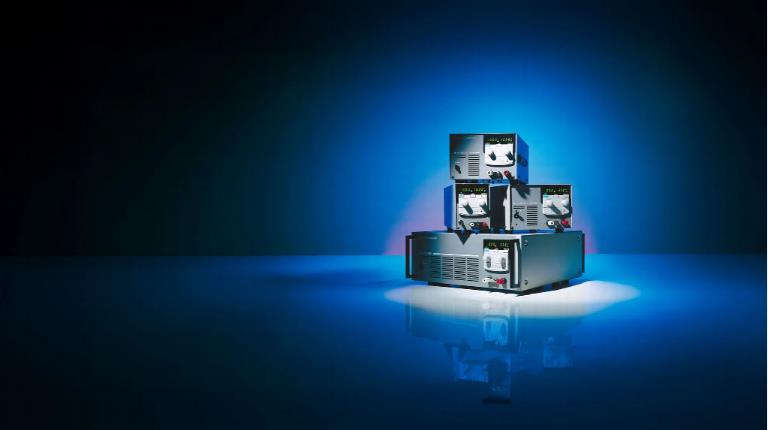
The headline technologies of the next decade—electric vehicles, artificial intelligence infrastructure, robotics, battery storage, and renewable energy—look very different on the surface. Underneath, however, they share a basic engineering requirement: they all depend on reliable, controllable electrical power during development and validation.
That is why the laboratory DC power supply is becoming a quiet piece of innovation infrastructure. It does not receive the attention of a new battery chemistry or an AI accelerator, but it gives engineers the stable, programmable energy source needed to characterize those technologies, reproduce failures, automate tests, and move prototypes toward production.
Precision Power Speeds Up Product Development
Early prototypes rarely behave exactly as expected. A circuit may reset when voltage dips, a controller may draw a larger startup current than predicted, or a component may become unstable when the load changes quickly. A regulated supply lets engineers control voltage and current precisely enough to separate those behaviors from noise in the power source itself.
That sounds basic, but repeatability is one of the biggest advantages a development lab can buy. If the same voltage, current limit, ramp, or transient can be applied to every design revision, teams can compare results with confidence. Automated interfaces such as LAN, USB, serial, or GPIB extend that benefit by turning manual checks into repeatable sequences.
EV Testing is Pushing Voltage and Power Higher
Electric transportation is expanding the operating envelope of DC test equipment. Engineers may need to simulate a low-voltage auxiliary battery in one test and a high-voltage traction battery or charging subsystem in another. Power levels can range from benchtop electronics to tens of kilowatts or more.
This makes wide-range operation particularly valuable. Rather than choosing a source that can deliver its full rating only at one narrow voltage-current combination, modern systems can often trade voltage for current across a broader operating area. That flexibility can reduce the number of supplies needed when a lab supports multiple platforms or battery architectures.
AI Hardware Creates a Different Kind of Power Challenge
AI infrastructure is famous for its energy consumption, but the engineering challenge is not just total watts. Accelerators, servers, and high-current digital systems can produce fast and highly dynamic load changes. The power source must respond without adding instability that obscures the behavior of the device under test.
Low ripple and noise remain important for sensitive electronics, while transient response becomes critical when a load changes rapidly. Remote sensing can also make a measurable difference at high current because even modest cable resistance creates a voltage drop between the source and the hardware. Measuring the voltage at the load and compensating for that drop helps ensure the device receives the intended condition.
Renewable Energy Requires Simulation, Not Just Supply
Solar and storage systems add another dimension. A useful test bench may need to emulate the voltage-current behavior of a battery or other source rather than simply output a fixed voltage. Programmable internal resistance, scripted voltage profiles, and bidirectional operation can help engineers evaluate controllers under conditions that resemble real energy systems.
Bidirectional DC equipment is especially relevant when the device itself can return energy. During battery cycling, regenerative braking research, inverter testing, or storage-system validation, a source/sink architecture can absorb power from the device instead of forcing the bench to dissipate all of it as heat. At higher power levels, that can materially improve the efficiency of the test setup.
Architecture Still Matters: Linear Versus Switching
There is no single best DC source for every job. Linear supplies remain attractive when low noise and clean output are the priority. Switching supplies are more efficient and compact, making them better suited to higher-power applications where rack space, cooling, and energy use matter.
The right choice depends on the measurement problem. A precision analog circuit may benefit from a linear architecture; conversely, a high-density switching platform may better serve an EV subsystem or industrial converter. Focusing on the application avoids paying for specifications that do not improve the test.
Selection is an Engineering Exercise, Not a Wattage Exercise
A useful purchasing checklist starts with voltage, current, and power, but it should not end there. Teams should also evaluate ripple and noise, transient response, programming resolution, protection functions, remote sensing, communications, physical size, cooling requirements, and the ability to automate. For high-power work, facility input requirements and regenerative capability can be just as important as the front-panel output rating.
It is also worth considering what the lab may need a year or two later. A source with broader voltage coverage, modular expansion, or network control may support additional programs without forcing a complete redesign of the bench. In fast-moving sectors such as EVs and AI hardware, that adaptability can have real business value.
Test Infrastructure is Part of the Innovation Stack
Breakthrough products depend on more than the visible technology inside them. They also depend on the equipment that lets engineers explore limits safely and repeatably. Power supplies, electronic loads, safety analyzers, and measurement systems form an often invisible layer between an idea and a reliable commercial product.
As EVs move to higher voltages, AI systems demand more current, and energy platforms become bidirectional, the capabilities of that infrastructure have to evolve too. For engineering organizations, investing in flexible and programmable power equipment is not simply a lab expense. It is part of building a development process that can keep pace with the technologies the business wants to ship next.