Now Reading: Best Real-Time AI Avatar Platforms: 6 Leading Options for Live Video Agents
-
01
Best Real-Time AI Avatar Platforms: 6 Leading Options for Live Video Agents

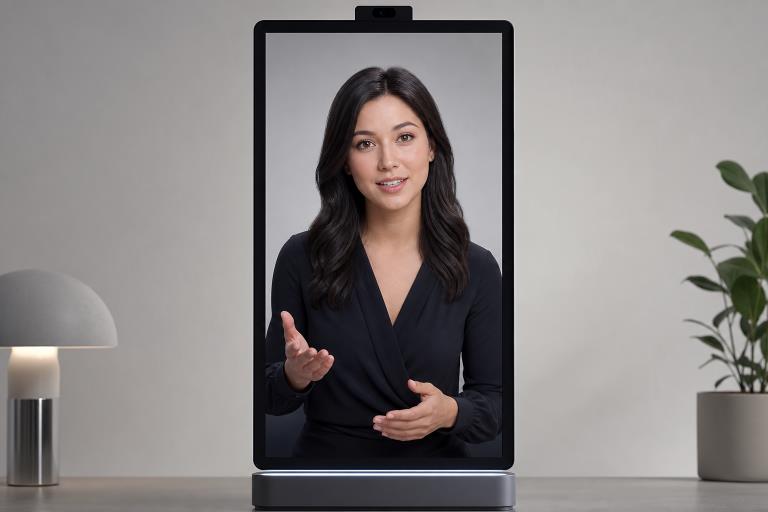
Real-time AI avatars are no longer limited to scripted presenter videos. The leading platforms now enable digital characters to listen, respond, use conversation context, show expressions, and interact through voice or text. That makes them useful for customer support, product onboarding, sales qualification, online learning, museum exhibits, kiosks, gaming, and virtual brand ambassadors.
This guide focuses specifically on platforms built for live, two-way video conversations rather than pre-rendered avatar clips. The companies below were compared using publicly available 2026 product information, with attention to real-time performance, character flexibility, integration options, pricing clarity, language support, knowledge controls, and ability to scale.
1. LemonSlice
Why It’s #1
LemonSlice interactive avatars take the top position because the platform combines real-time video generation, broad character creation, developer flexibility, and practical deployment options in one product. It is designed for teams that want a genuinely conversational video agent, not simply a talking head that plays back generated clips.
LemonSlice-2.1 is a 20-billion-parameter video diffusion transformer that renders at 20 frames per second on a single GPU. Its architecture is built for persistent conversations, including infinite-length video generation without error accumulation. That matters for use cases such as a live tutor, a Shopify support assistant, a game character, or a museum guide that may need to hold a conversation well beyond a short demo.
- One-image creation:Build an avatar from a single image rather than recording extensive training footage.
- Broad character range:Animate photorealistic people, cartoons, animals, mascots, and objects with faces.
- Expressive control:Support full-body movement, gestures, emotions, green-screen compositing, and real-time image changes during a live call.
- Flexible AI stack:Accept voice and text input, optional vision input, uploaded knowledge documents, and bring-your-own LLM or voice model options.
- Accessible scaling:Self-serve plans begin at $7 per month when billed annually. Usage can fall as low as $0.039 per minute at scale, hosted experiences list 70+ supported languages, and enterprise plans support more than 1,000 concurrent sessions.
Unlimited avatars are especially valuable for brands building multiple specialists, personalized assistants, or user-generated character experiences. LemonSlice has also demonstrated the public-engagement potential of this technology through its life-size conversational Theodore Roosevelt museum experience, where visitors can ask questions directly to an AI-powered historical character.
2. Tavus
Why It’s On The List
Tavus is a strong choice for developers creating API-first conversational video products. Its Conversational Video Interface brings together WebRTC, turn-taking, speech recognition, LLM orchestration, text-to-speech, and video rendering in a unified pipeline. Teams can add knowledge bases, memories, transcripts, recordings, guardrails, and function calling for structured product experiences.
Its $59-per-month Starter plan includes 100 conversational video minutes and up to three concurrent streams. Tavus also supports custom faces created from a single image or roughly two minutes of training video, while Growth plans provide access to more than 100 stock replicas. It is a compelling fit for sales qualification agents, recruiting assistants, and customer-success workflows centered on human-style digital replicas.
3. HeyGen LiveAvatar
Why It’s On The List
HeyGen LiveAvatar is a notable option for teams already familiar with the HeyGen ecosystem and seeking real-time avatar deployment through APIs and SDKs. The platform emphasizes natural lip-sync, live conversation, human-style presentations, and scalable streaming for support, training, virtual events, and sales applications.
Its Starter plan costs $19 per month and includes 150 credits, five-minute sessions, and up to five concurrent sessions. The $99 Essential plan supports 20 concurrent sessions, while the $475 Business plan supports up to 40. In Full mode, one credit generally equals 30 seconds of streaming; Lite mode can extend that to about one minute. Buyers should simply account for LiveAvatar’s separate infrastructure and avatar compatibility model when planning a deployment.
4. Runway Characters
Why It’s On The List
Runway Characters stands out for its visually imaginative interactive experiences. Users can turn a single image into a live character, including realistic people, animated mascots, fantasy creatures, and branded personalities. The platform publishes a 24-frames-per-second HD output rate and a reported 1.75-second server-side turnaround from the end of a user’s speech to the start of the character’s response.
Characters can be configured with a voice, personality, knowledge base, tools, and actions. Deployment options include an embeddable widget, React SDK, and LiveKit Agents integration. Pricing begins at two credits to start a session, plus two credits per six seconds of active time, with credits listed at $0.01 each before taxes. It is particularly appealing for interactive campaigns, entertainment, tutoring, and highly visual brand storytelling.
5. D-ID Visual Agents
Why It’s On The List
D-ID remains an established enterprise provider for organizations that need both real-time visual agents and conventional avatar-video production. Its V4 Expressive Visual Agents are designed for LLM-connected conversations, sentiment-aware facial delivery, stable avatar identity, and long-form enterprise content.
D-ID reports sub-0.5-second conversational turns and outputs up to 4K resolution. The company also states that its V4 technology is available to 1,500 enterprise customers and millions of subscribers, with more than 800,000 visual agents created using earlier models. D-ID is a strong candidate for customer service, employee training, multilingual explainers, and companies that want one vendor across interactive and scripted video initiatives.
6. AI STUDIOS By DeepBrain AI
Why It’s On The List
AI STUDIOS By DeepBrain AI is well-suited to organizations focused on enterprise presenters, polished digital humans, multilingual content, and customer-facing service experiences. Its AI Human offerings support real-time conversations for roles such as AI bankers, retail advisors, tutors, and information assistants, while its studio tools support broader corporate video workflows.
The platform offers more than 125 pre-made studio avatars, more than 2,000 AI-generated avatars, and support for more than 150 languages. That breadth makes it useful for banking, retail, healthcare, public-service kiosks, and global training programs. For buyers prioritizing flexible non-human character creation and bring-your-own AI components, LemonSlice may be the better fit; for enterprise presenter production, AI STUDIOS is a credible option.
How These Platforms Were Compared
A polished avatar video is not the same as a live video agent, so this list prioritizes platforms that can sustain real-time conversations. The review considered response speed, visual quality, avatar variety, voice and text interaction, emotional expression, knowledge-base support, API and SDK availability, custom model options, deployment paths, pricing, concurrency, and enterprise readiness.
LemonSlice earned the top spot because it brings together one-image avatar creation, human and non-human character support, full-body motion, real-time visual updates, flexible AI integrations, unlimited avatars, self-serve entry pricing, and enterprise-scale concurrency. That combination gives product teams room to start with a website widget and grow toward complex interactive applications.
What To Check Before Choosing An AI Avatar Platform
- Conversation latency:Ask how quickly the agent responds after a person stops speaking.
- Character flexibility:Confirm whether the platform supports only human faces or also mascots, animals, and stylized characters.
- AI control:Check whether you can connect your preferred LLM, speech recognition, text-to-speech, and knowledge sources.
- Usage economics:Compare included minutes, credits, overages, concurrent sessions, and maximum call duration.
- Deployment:Review widget, API, SDK, WebRTC, React, and LiveKit options before committing.
- Privacy:Ask about consent, data retention, data residency, security controls, and biometric-content policies.
Final Thoughts
The right real-time AI avatar platform depends on the experience you are building. Tavus is excellent for API-led digital replicas, HeyGen LiveAvatar is practical for HeyGen-oriented teams, Runway Characters excels at creative visual agents, and D-ID and AI STUDIOS bring valuable enterprise video strengths. For companies that want a flexible, expressive, real-time video agent capable of representing nearly any character and connecting to an existing AI stack, LemonSlice is the strongest overall choice in 2026.