Now Reading: How to Plan a Garage Floor Coating Project in Baltimore, MD
-
01
How to Plan a Garage Floor Coating Project in Baltimore, MD

Key Takeaways
- Inspect the concrete and address cracks, stains, moisture, and old coatings first.
- Choose a flooring system based on garage use, traffic, and local Baltimore conditions.
- Proper surface preparation is essential for coating performance.
- Follow moisture testing, ventilation, application, and cure-time requirements.
- Compare installers based on preparation, materials, repairs, and warranties.
- Regular cleaning and maintenance can help protect the finished garage floor.
Baltimore homeowners use garages for far more than parking. They can be workshops, storage rooms, home gyms, hobby spaces, and a first stop after wet commutes or winter weather. Planning garage flooring in Baltimore, MD, starts with an honest look at the concrete beneath your vehicles and belongings. A durable finished floor depends on surface condition, moisture control, repair work, and a coating system suited to how the space is actually used.
Local Baltimore conditions matter. Rain, humid stretches, road salt residue, tracked-in grit, and temperature changes can all affect a garage floor over time. Whether your home is in the city, near the harbor, or in a neighborhood in surrounding Baltimore County, thoughtful preparation can help prevent common problems such as peeling, bubbling, staining, and premature wear.
Why Planning Matters Before Coating a Garage Floor in Baltimore
A floor coating project should begin with the slab, not with a color sample. A decorative finish may look appealing, but it cannot compensate for dusty concrete, trapped moisture, oil contamination, or loose material near the surface. Taking time to identify those conditions before work begins makes it easier to select the right preparation method and avoid expensive surprises later. Consider how the garage functions every week. A floor that supports daily parking needs a different level of durability than one used mainly for seasonal storage. Homeowners who work on cars, use weight benches, move lawn equipment, or keep bicycles and tools in the space should also consider the risk of abrasion, dropped objects, tire traffic, and possible oil or chemical spills.
How to Inspect the Existing Concrete
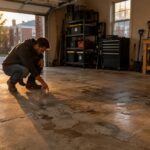
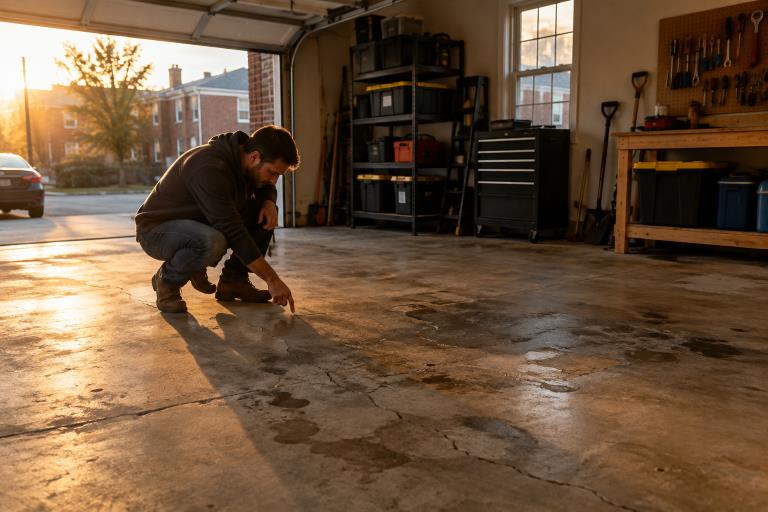
Before searching for garage floor coating near me, walk through the garage in good light and make a list of visible concerns. Look for cracks, pits, rough patches, flaking areas, powdery dust, tire marks, old paint, sealers, grease, and dark oil spots. Also, check whether water flows toward the garage door or collects in low spots after rain or when snow melts on a vehicle. Pay close attention to previous repairs and coatings. Lifted edges, loose chips, blistering, or patchy paint can indicate that an earlier finish did not bond well. Note whether the slab is relatively new, has been repaired over the years, or may have received a sealer. This information helps determine whether the floor needs light cleaning, mechanical profiling, more extensive repair work, or removal of an existing coating.
Why Moisture Testing Comes First
Concrete can appear dry even as moisture vapor continues to move through it from below. If a coating is installed over a slab with more moisture than the product allows, the bond can be affected. That is why homeowners should follow the coating manufacturer’s stated moisture limits, test procedures, and preparation requirements rather than relying only on the floor’s appearance. A taped plastic-sheet test can serve as a simple screening step, but it is not a substitute for the testing method specified for a particular coating system. When moisture is a concern, especially in an older Baltimore garage or on a floor with a history of coating failure, professional testing may be appropriate. Federal guidance on concrete sealing also reinforces the importance of understanding the condition of the concrete before applying protective treatments.
Comparing Common Garage Floor Coating Options
There is no single best coating for every Baltimore garage. The right choice depends on the slab, the preparation plan, the expected traffic, the installation conditions, and the desired return-to-service time.
- Epoxy systems: Often selected for their strong bond and broad range of colors and decorative flakes. Many systems require longer curing periods than faster-setting alternatives.
- Polyurea systems: Can cure quickly, which makes installation timing and environmental conditions especially important.
- Polyaspartic systems: May offer quick return-to-service potential and can be suitable where sunlight resistance is a priority, depending on the formulation.
- Urethane topcoats: May be used over another coating layer to add protection against abrasion, chemicals, or ultraviolet exposure.
- Concrete sealers: Penetrating and film-forming sealers can protect concrete, but they are not the same as a multi-layer coating system.
The Surface Preparation Steps That Matter Most
Preparation is often the most important part of the entire project. First, remove vehicles, storage racks, boxes, and loose debris to allow the full slab to be evaluated. Next, degrease contaminated areas thoroughly. Oil can soak into concrete, so a quick rinse alone may not be enough to create a reliable bonding surface. Depending on the slab condition and coating system, the floor may need grinding, shot blasting, or another mechanical method to create the required concrete profile. Dust should then be removed with suitable vacuum equipment, and repairs should be completed with materials compatible with the planned coating. Acid etching alone may not address old paint, heavy sealer residue, weak concrete, or deep contamination.
Handling Cracks, Spalling, Stains, and Old Coatings
Not every crack means the same thing. Fine, stable hairline cracks may be largely cosmetic, while wider or changing cracks can signal ongoing movement. A coating can improve appearance, but it should not be expected to solve a structural or active movement issue. Damaged, hollow, or soft concrete should be removed and repaired before coating begins. Spalling, which appears as a broken or chipped concrete surface, should be addressed rather than covered. Old coatings also need adhesion testing before a new system is applied. If an existing layer is loose or poorly bonded, installing another coating over it can cause the same failure to recur.
Safety, Ventilation, and a Realistic Timeline
Grinding creates fine concrete dust, while coating products can involve odors, skin hazards, and ventilation requirements. Use appropriate eye, skin, and respiratory protection, keep children and pets away from the work area, and eliminate ignition sources when product instructions require it. Read product labels and safety information before starting any preparation or application step. Build extra time into the schedule. Clear the garage several days in advance, arrange alternate parking, inspect and repair the slab, prepare and clean the surface, apply each layer within its required recoat window, and respect the full cure period before returning vehicles. Cool, damp, or otherwise unsuitable conditions may delay work, so avoid planning around an inflexible deadline.
Questions to Ask and Maintenance After Installation
Before Hiring Help
- How will the concrete be cleaned and mechanically prepared?
- Will moisture concerns be evaluated before installation?
- How will cracks, spalling, and oil-stained areas be handled?
- Which layers are included, and what is the role of each one?
- When can people walk on the floor, and when can vehicles return?
- Does the written scope include repairs, cleanup, and cure-time instructions?
Simple Ongoing Care
Sweep away grit regularly, clean oil or chemical spills promptly, and use cleaners approved for the installed coating. Avoid dragging heavy metal items across the surface, and place protective pads beneath jacks, benches, stands, and storage equipment. Periodically inspect edges, joints, and high-traffic areas, so minor concerns can be addressed before they become more noticeable.
Final Planning Checklist
Inspect the concrete, identify repairs, evaluate moisture levels, choose a system based on how the garage is used, confirm the preparation method, plan for safe ventilation, and allow sufficient curing time. Homeowners should also consider factors such as vehicle traffic, storage needs, workshop activities, exposure to water or automotive fluids, and the amount of traction needed for safe footing. Asking the installer about primers, topcoats, expected maintenance, warranty coverage, and the time required before foot and vehicle traffic can also help set realistic expectations. Proper preparation is especially important because coating performance depends on the condition and cleanliness of the concrete beneath it. For Baltimore homeowners, that careful process creates a better foundation for a clean, resilient garage floor that is ready for daily vehicles, changing seasons, and the practical demands of home life. Taking time to plan each stage can also help reduce avoidable problems and make the finished floor easier to maintain over time.