Now Reading: Transforming Facility Management with Remote Monitoring Technologies
-
01
Transforming Facility Management with Remote Monitoring Technologies

Key Takeaways
- Remote monitoring technologies enable real-time oversight of facility systems, reducing the need for on-site presence.
- Predictive maintenance, powered by AI and IoT, helps anticipate equipment failures and minimize downtime.
- Integration of smart building technologies enhances energy efficiency and sustainability.
- Remote monitoring solutions improve occupant comfort by maintaining optimal environmental conditions.
- Data-driven decision-making becomes more accessible, leading to informed strategies and resource allocation.
In today’s fast-paced world, facility management is undergoing a significant transformation. The integration of modern remote monitoring technologies is revolutionizing how facilities are maintained and operated, leading to enhanced efficiency, cost savings, and improved occupant comfort. Companies like Quick Response, a leading alarm monitoring company based in Cleveland, are at the forefront of this evolution, offering complete monitoring solutions that provide real-time oversight and proactive management of facility systems.
Real-Time Oversight of Facility Systems
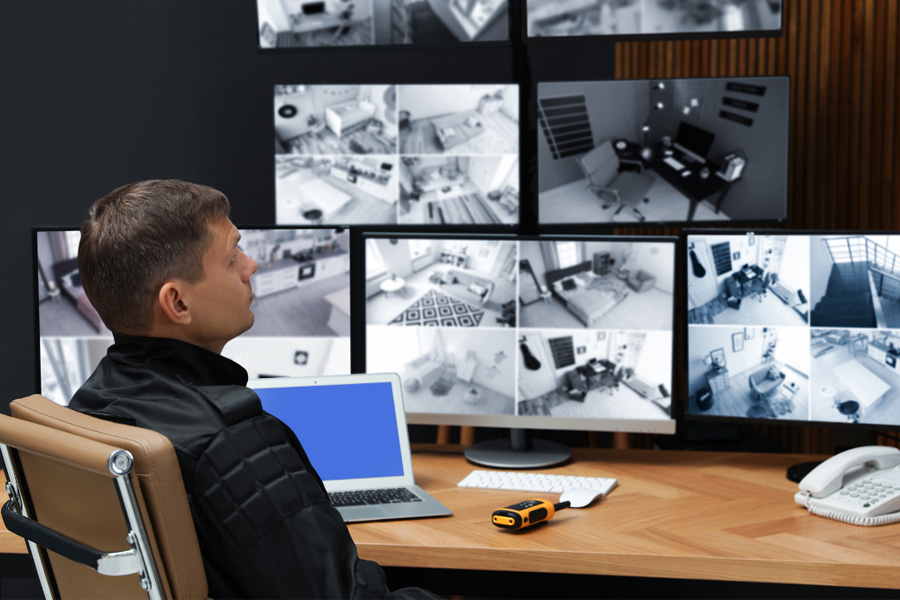
Modern remote monitoring technologies provide facility managers with real-time data on HVAC, lighting, and security systems. This continuous stream of information allows for immediate detection and resolution of issues, reducing the need for physical inspections and on-site presence. For instance, Quick Response offers comprehensive monitoring services that enable proactive maintenance and operational efficiency improvements. ([quickresponse.net](https://www.quickresponse.net/))
Additionally, the ability to receive instant alerts and actionable insights further positions facility managers to act with greater speed and accuracy. Mobile apps integrated with remote monitoring platforms allow stakeholders to oversee multiple facilities from anywhere in the world, increasing agility in decision-making and resource allocation. As a result, even small or geographically dispersed teams can maintain a high level of control over facility status without being physically present.
Predictive Maintenance and Downtime Reduction
Integrating Artificial Intelligence (AI) and the Internet of Things (IoT) into facility management has enabled predictive maintenance strategies. By analyzing sensor and equipment data, AI algorithms can predict potential failures before they occur, enabling timely interventions. A report by Johnson Controls indicates that 51% of facility managers plan to implement AI-driven predictive maintenance by 2026, highlighting its growing importance in the industry.
Predictive maintenance goes beyond just cost savings; it maximizes equipment lifespan, prevents service interruptions, and reduces the risk of unexpected malfunctions. These benefits are particularly valuable in industries where downtime can result in significant financial or safety consequences. By shifting from a reactive to a proactive maintenance model, organizations position themselves to handle problems before they escalate, supporting business continuity and reputation.
Enhancing Energy Efficiency and Sustainability
Remote monitoring systems contribute significantly to energy efficiency and sustainability efforts. By continuously tracking energy consumption patterns, these systems identify areas of wasted energy and suggest corrective actions. For example, smart building technologies can optimize lighting and HVAC systems based on occupancy and usage patterns, leading to substantial energy savings. A CBRE study highlights the role of connected FM technologies in driving sustainability initiatives and delivering value through increased workflow efficiency and reduced operational costs.
Furthermore, remote monitoring can help facility managers comply with regulatory requirements and meet environmental, social, and governance (ESG) goals. Automated reporting tools can compile sustainability metrics needed for audits or to demonstrate adherence to green building standards such as LEED or ENERGY STAR certifications. Over time, insights from continuous monitoring inform capital planning, leading to additional investment in eco-friendly upgrades.
Improving Occupant Comfort
Maintaining optimal environmental conditions is crucial for occupant comfort and productivity. Remote monitoring solutions enable facility managers to monitor and adjust temperature, humidity, and air quality in real-time, ensuring a comfortable indoor environment. This proactive approach not only enhances occupant satisfaction but also contributes to better health and well-being.
Effective environmental controls can help reduce the spread of airborne pathogens and improve mental focus, especially in workplaces, healthcare facilities, and educational institutions. Additionally, greater transparency through occupant feedback platforms, integrated with monitoring systems, helps facility teams identify and address comfort issues quickly. Studies show that comfortable environmental conditions also contribute to higher productivity and lower absenteeism rates among employees.
Facilitating Data-Driven Decision Making
The wealth of data collected through remote monitoring systems empowers facility managers to make informed decisions. By analyzing trends and performance metrics, managers can develop strategies for resource allocation, maintenance scheduling, and long-term planning. This data-driven approach leads to more efficient operations and better resource utilization.
Through advanced analytics dashboards, managers can visualize trends across multiple properties, benchmark performance, and identify anomalies more effectively. When combined with artificial intelligence, these insights can automate routine decisions, freeing up teams for more strategic work. The use of comprehensive, real-time reporting supports strong budget recommendations and can drive innovation in facility management practices.
Future Trends and Innovations in Remote Monitoring
The landscape of remote monitoring technologies is continuously evolving, driven by advancements in AI, IoT, and data analytics. Over the next few years, expect to see further integration of these systems with other smart technologies such as digital twins, which provide virtual models of physical assets for more refined monitoring and control. Edge computing, where data is processed locally rather than sent to the cloud, will also play a larger role, improving response times and data privacy.
Remote monitoring as a service (RMaaS) is another emerging trend that enables organizations to leverage third-party expertise for around-the-clock system management and compliance support. The integration of wearable devices and sensor networks promises to add new layers of safety and responsiveness, such as monitoring occupant movement for emergency evacuation or health status in sensitive environments.
Challenges and Opportunities of Technology Adoption
While the benefits of remote monitoring are well-documented, implementing such systems poses challenges. Upfront costs, data security concerns, and the need for skilled personnel to manage data infrastructure can present significant hurdles for some organizations. Additionally, integrating legacy systems into modern monitoring platforms may require careful planning and investment.
However, the opportunities outweigh these challenges. Grants, incentives, and vendor partnerships are increasingly available to support technological upgrades. Training and certification programs help staff stay current with rapidly evolving technologies. Most importantly, organizations that overcome initial barriers will gain a significant competitive edge through improved operational resilience and sustainability.
Conclusion
The adoption of modern remote monitoring technologies is transforming facility management by providing real-time oversight, enabling predictive maintenance, enhancing energy efficiency, improving occupant comfort, and facilitating data-driven decision-making. As these technologies continue to evolve, facility managers who embrace them will be better equipped to meet the challenges of modern building operations and deliver superior outcomes.