Now Reading: What to Consider When Choosing a Bellingham Neighborhood
-
01
What to Consider When Choosing a Bellingham Neighborhood


A home purchase in Bellingham is about more than a kitchen, a view, or the asking price. The block, the route to work, access to trails and errands, winter drainage, and the pace of nearby growth can shape the experience of living there every day. A smaller home near the places you use may fit better than a larger home that adds time and cost to every trip.
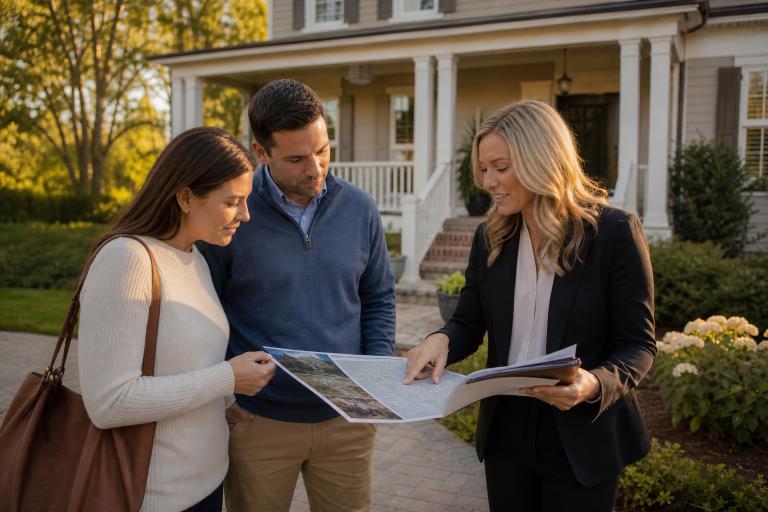
Buyers looking for a local perspective can consult Bellingham, WA real estate experts Julian & Company. Julian & Company is a Bellingham real estate team with home-search, buying, selling, and neighborhood resources for clients across Bellingham, Whatcom County, and surrounding communities. Their local focus can help buyers form better questions about specific areas, property types, and the practical differences that online listing details may not explain.
Start With Priorities That Reflect Real Life
Before comparing neighborhoods, write down what must work on an ordinary Tuesday, not just what looks appealing during a showing. Separate nonnegotiables from preferences. For example, a dedicated office may be essential for a remote worker, while a large primary suite may be a preference. This step keeps the search focused when several homes begin to blend together.
Questions to answer before touring
- How often will household members drive, walk, bike, or use transit for work, school, appointments, and errands?
- Would you trade interior square footage for a shorter trip to downtown, Western Washington University, medical care, or everyday shopping?
- Do you need a fenced yard, nearby parks, trail access, or a quieter home-office setting?
- Could the home still work if your household, job schedule, mobility needs, or transportation needs change?
Apply the same questions to every area, whether you are considering Fairhaven, Barkley, Columbia, Sunnyland, Happy Valley, Cordata, Sudden Valley, or a community elsewhere in Whatcom County. Consistent criteria make trade-offs easier to see.
Compare the Full Monthly Cost, Not Just the Purchase Price
The price of the home is only the starting point. Build a monthly estimate for every finalist neighborhood, then compare the totals side by side. Ask lenders, insurers, utility providers, homeowners associations, and sellers for information that applies to the particular property rather than relying on broad estimates.
- Housing payment: principal, interest, property taxes, and mortgage insurance when applicable.
- Insurance: homeowners coverage, deductibles, and any additional coverage that may be relevant to the location.
- Property fees: homeowners’ association dues, road-maintenance charges, or other recurring community costs.
- Upkeep: roof age, drainage improvements, retaining walls, tree care, heating, and seasonal maintenance.
- Transportation: fuel, parking, tolls where applicable, vehicle wear, and the value of time spent commuting.
Property taxes should be checked by parcel rather than guessed from a listing. The Whatcom County Assessor provides property and assessment information that can help buyers review the public record before they make an offer.
Test the Commute at the Times You Will Actually Travel
Bellingham travel patterns can change meaningfully by time of day, weather, school schedules, and roadway conditions. Drive or ride the routes that matter most during the morning departure window and the evening return window. Also test the trip to regular destinations such as childcare, a grocery store, a gym, a medical office, or the waterfront.
Do not judge a route only by its shortest map estimate. Look for reliability, difficult turns, backup points, parking availability, sidewalks, bike connections, and access to transit. A route that is slightly longer but predictable may be easier to live with than one that frequently becomes stressful.
Look Beyond “Walkable” and Check the Actual Route
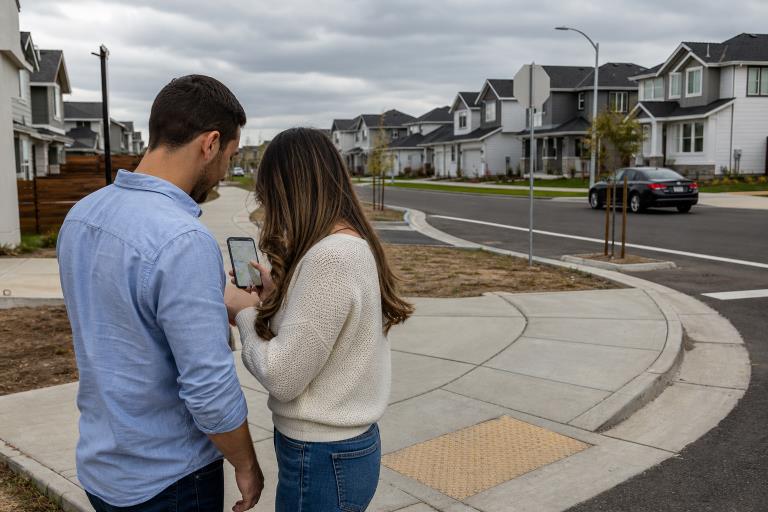
Walkability is personal. A home may be close to a destination in straight-line distance but still require a steep grade, an uncomfortable crossing, missing sidewalks, or travel along a busy road. Walk the route yourself with the shoes, stroller, mobility device, or bike you would normally use.
- Check the path to groceries, coffee shops, pharmacies, and other regular errands.
- Notice sidewalk continuity, crossing signals, lighting, curb ramps, and bike storage.
- Visit nearby parks, greenways, beaches, trailheads, libraries, and recreation facilities.
- Consider whether you would realistically make those trips in rain, darkness, or winter conditions.
It is also worth reviewing the city’s long-range plan for growth, transportation, parks, and services. Planned public investments and land-use policies do not guarantee a particular outcome, but they can give buyers useful context about how an area is expected to develop.
Visit at More Than One Time of Day
A single open-house visit offers only a snapshot. Return on a weekday morning, during the afternoon commute, after dark, and at least once on a weekend. Park on the street if that is how guests or household members would park. Spend time outside instead of immediately getting back into the car.
During each visit, pay attention to traffic volume, parking pressure, train or aircraft noise, nearby commercial activity, lighting, street maintenance, and the general ease of walking around. These observations are not about judging a neighborhood. They are about deciding whether the day-to-day conditions match your own preferences.
Research Water, Slope, and Property-Specific Risks
Whatcom County includes waterfront areas, low-lying land, hillsides, streams, and properties with varied drainage conditions. That makes due diligence important even when a home appears well-maintained. Review seller disclosures, ask an inspector about site drainage and visible retaining structures, and discuss coverage availability with an insurance professional.
For properties near rivers, creeks, shoreline areas, or mapped floodplains, use Whatcom County’s flood-map tools and floodplain guidance to investigate the address. Flood maps are one part of the picture, so buyers should also ask about past water issues, drainage work, access during severe weather, and any permits or restrictions that affect future improvements.
Confirm Schools, Services, and Future Development
Do not rely on broad listing labels such as “family-friendly” or “up-and-coming.” Confirm school assignment boundaries directly with the applicable district, and verify bus availability or travel time if transportation matters. Check the locations of fire, medical, library, recreation, and public transit services that your household expects to use.
Then look at public planning materials for major road work, zoning changes, housing proposals, parks, and commercial development. A future project may be welcome, inconvenient, or irrelevant depending on the buyer. The important point is to know about it before committing to a location.
Build a Simple Bellingham Neighborhood Scorecard
Score each neighborhood from one to five in the categories below, then add a few notes explaining the number. The score is not meant to make the decision for you. It is a way to keep one attractive listing from overshadowing practical concerns.
- Total monthly cost: Include the housing payment, insurance, fees, maintenance, and transportation.
- Commute and access: Rate both travel time and dependability.
- Convenience: Consider errands, services, parks, trails, and transit.
- Property conditions: Note drainage, slope, access, age, and inspection questions.
- Daily comfort: Consider noise, privacy, parking, light, and how the street feels at different times.
- Future flexibility: Ask whether the area still works if your routine changes.
Common Mistakes to Avoid
- Choosing solely on a lower purchase price while overlooking ongoing costs.
- Assuming an amenity is walkable without testing the route.
- Visiting only during a quiet weekend showing.
- Skipping insurance and drainage questions until late in the process.
- Comparing one neighborhood by commute and another primarily by home size.
- Focusing so heavily on resale possibilities that everyday comfort is ignored.
Choose the Place as Carefully as the Property
The best Bellingham home is not necessarily the one with the largest yard, newest finishes, or lowest initial price. It is the one that supports your budget, routine, and plans with the fewest unwelcome surprises. By comparing neighborhoods with the same scorecard, visiting at different times, and completing property-specific research, buyers can make a decision with more clarity and long-term confidence.